
It’s the moment every hunter waits for: you just felled a deer and you saw exactly where it dropped. You go over to collect your harvest and claim your wild game, but you need to field dress it first and get it back to your car. What’s the best way to transport the game through the woods and back home? Check out our tips below for how our Trail Runner 62 utility sled can help make the field dressing process an efficient one.
Trail Runner 62 Sleds and Trailers
Field dressing your deer immediately after a harvest is an efficient way to make the wild game easier to carry and it gets your wild game onto the dinner table that much faster. Our Trail Runner sleds have been designed to haul wild game, timber, feed, our Wild Waer Bladder and more to and from your Stump blind. The sleds are crafted out of durable, roto-molded UV-stabilized polyethylene and can haul up to 1,500 pounds. This means that you can haul multiple deer at once and you can throw all of your equipment in the sled with ease. You can use the molded-in tow ears to transport the sled by hand or use your ATV/UTV to tow the sled behind you using our Steel Hitch and our Trail Runner 2” Coupler Adapter. The adapter lets you attach the Trail Runner to the standard 2” ball hitch on your vehicle. The base of the sled has five thick and durable molded-in runners and six cargo tie-down holes for added stability. You can also use the Trail Runner Rail Kit to extend the height of the sled by attaching the three-sided rail walls.
Our Trail Runner 62 Trailer has all the features of the sled and includes durable off-road tires for high speed transport.
If you take your deer to a local processor for field dressing, the sleds and trailers will work for you, too. They’re large enough and can withstand enough weight that you can haul the entire deer, intact, onto the sled without needing to do any field dressing on-site. Take the entire deer to your car with the Trail Runner and head out to your favorite processor to package your venison. Even if you don’t field dress the deer in the woods, you’ll need to tag the deer before you remove it from the property.
Leave One by Your Blind
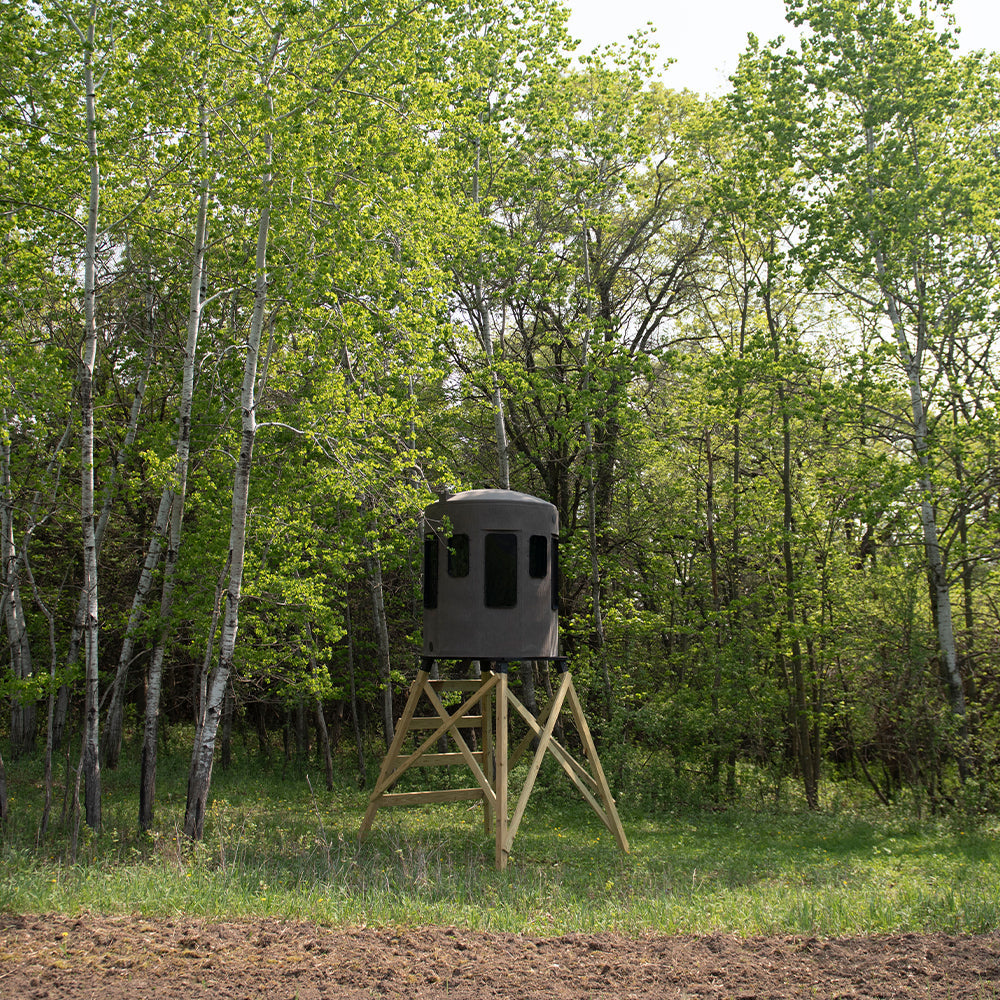
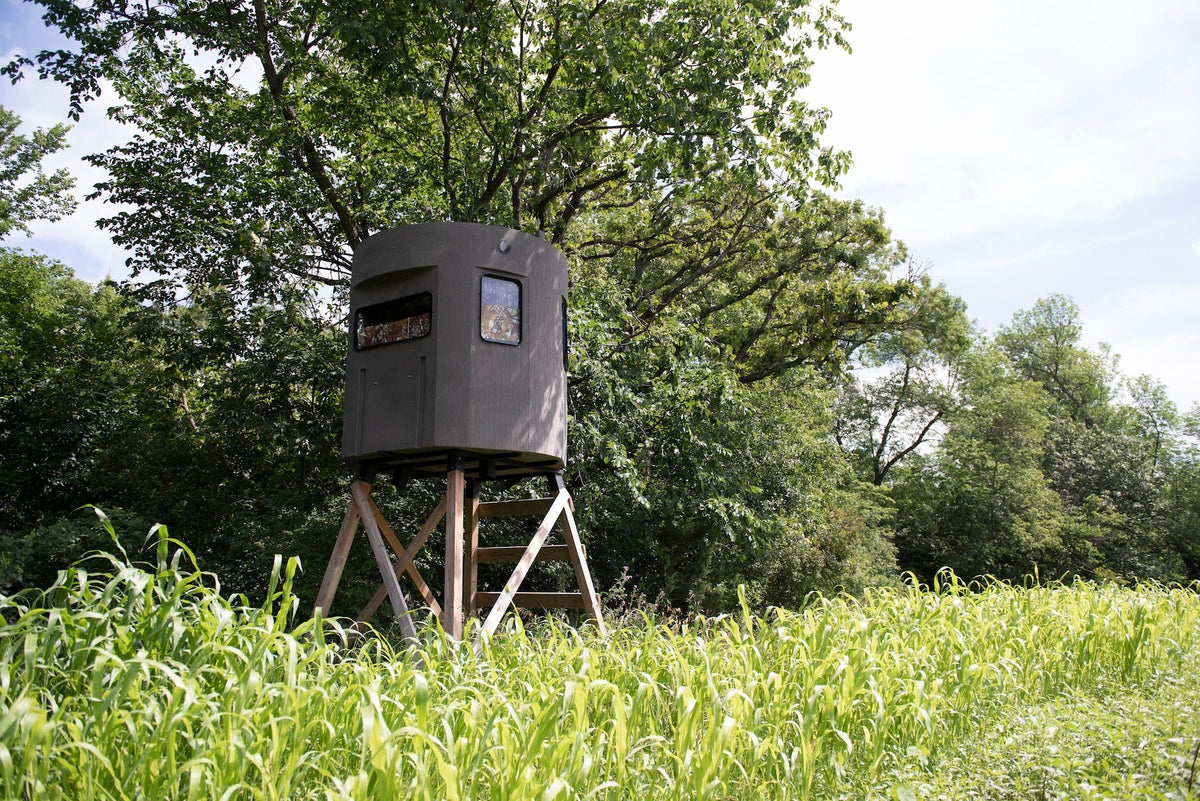
You can leave one of our sleds or trailers by your Stump blind so that you always have one ready to go whenever you make a successful harvest. The UV-stabilized material allows the sled to withstand harsh sun and weather conditions, so you can leave it out without worrying that it will be damaged by the sun, just like our Stump blinds. Some public land requires you to remove your blinds at the end of the day, so check your state’s regulations to confirm where and when you can leave your Stump blind and trailers set up.
When you make your next harvest, use our Trail Runner sleds and trailers to haul your bounty back to your vehicle and get it onto your dinner table. Banks Outdoors products are designed to make the hunting process efficient and reliable, and this year’s addition of the Trail Runner series is no exception.
How do you use our Trail Runner 62 Utility Sled to aid your field dressing process? Let us know in the comments below.


How the 'Feedbank 300' Keeps Deer Close as Food Sources Shift
Enhancing Concealment: Installing Phantom Windows on Your Banks Hunting Blinds