

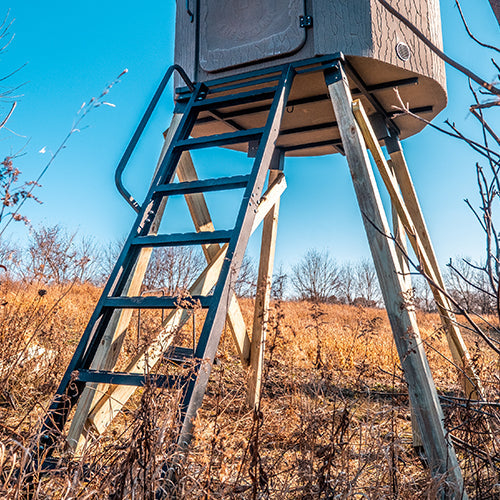
September is a month of transition where the weather changes from harsh summer heat to crisp fall chill. When temperatures drop about 10 degrees or more in one day, that will trigger an increase of deer activity. When this transition happens, make sure you’re ready to capitalize on the deer movement that this cold front will bring about. Saturday is the big day here in Minnesota, so check out our tips, below, to make sure you’re ready for your early-season hunts.
Focusing on Food
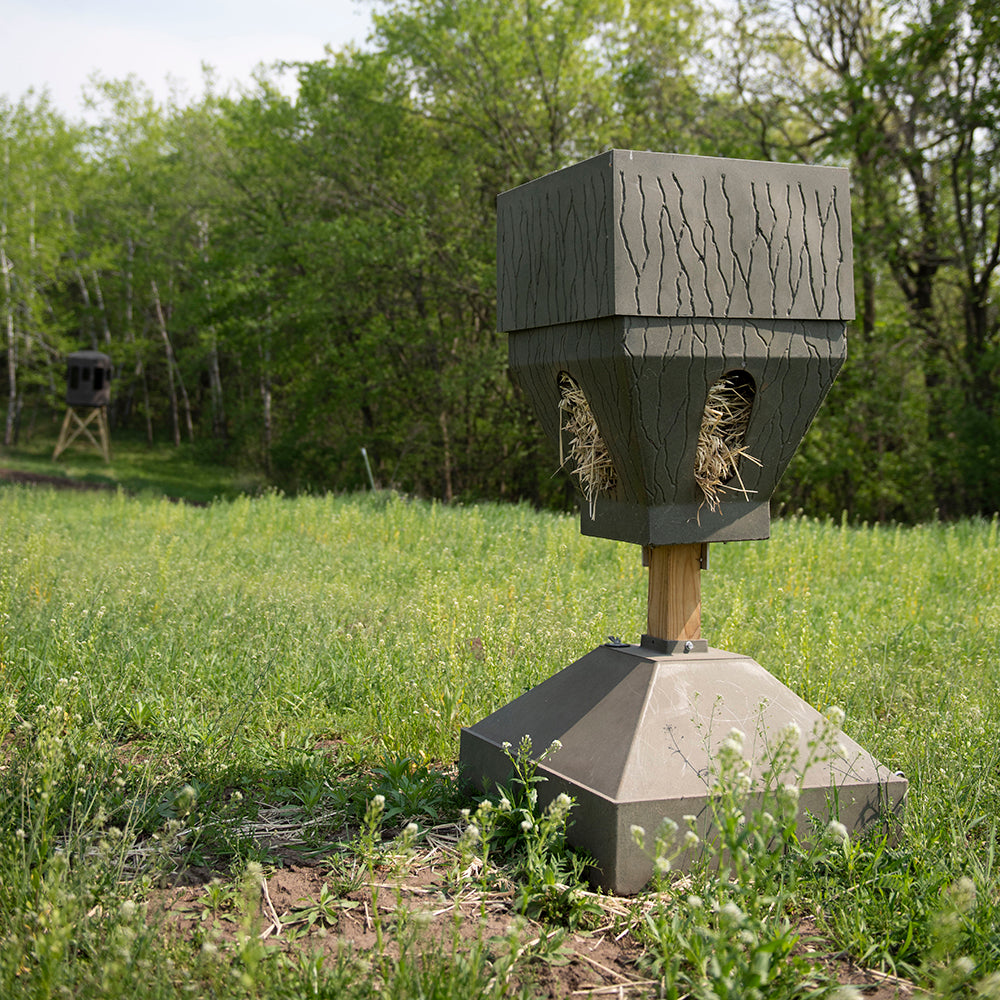
It’s still too early for rut season, so seeking out food sources is still the deer herd’s main activity. Position yourself and your Stump blinds near food sources like your Feedbank Gravity Deer Feeders or your natural food plots. The deer will still be grazing on natural crops like corn, soybeans and alfalfa, nuts like acorns, and fruits like apples and pears. Place yourself on the edges of these food sources to put yourself in their path. Make sure you’re keeping your feeders full to bring the deer into your property in these crucial first couple months before hunting pressure sets in.
More Daylight Movement
When a cold front comes in, it makes it more comfortable for the deer to move throughout the daylight hours. They won’t have to avoid the harsh mid-day summer sun anymore, so you’ll see an influx of activity during daylight hours. Make sure you’re keeping an eye on your trail cameras at all hours.
Different Wind Direction
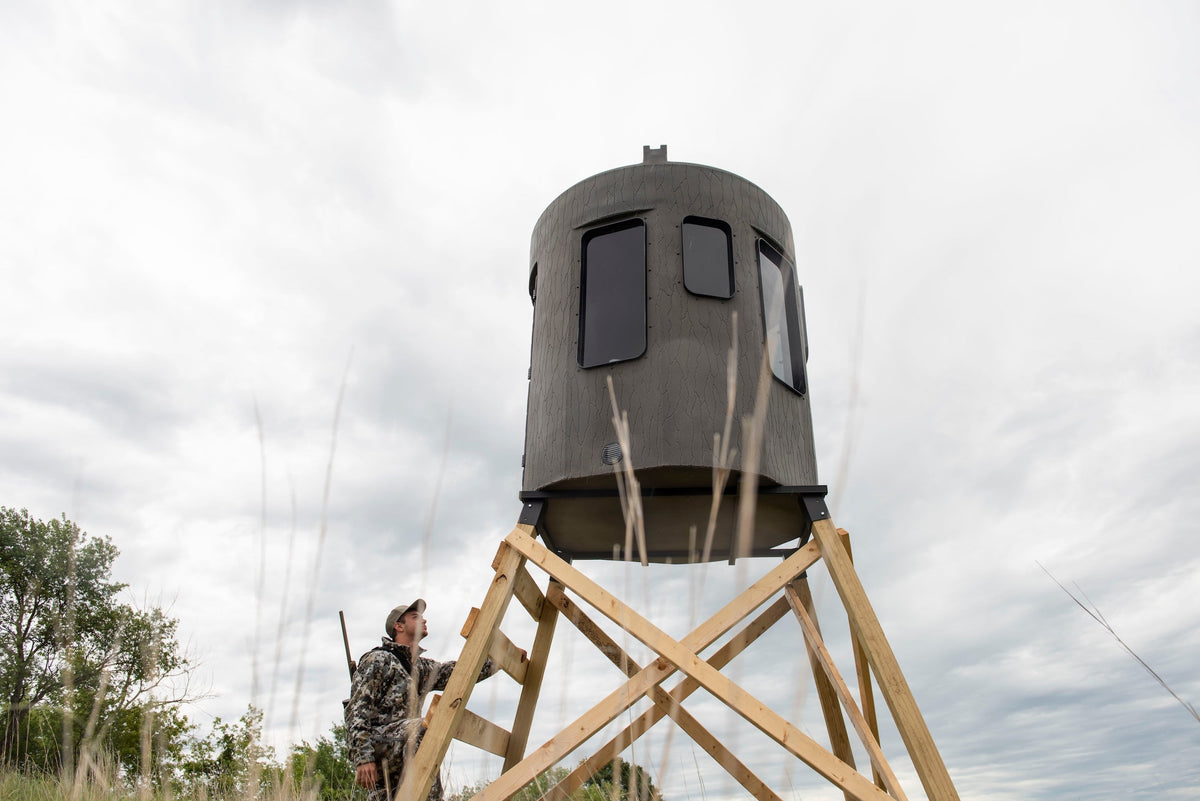
Colder winds typically come from the north as opposed to warmer southern winds. As you navigate your blind setup, make sure you’re accounting for the change in wind direction to manage your scent control. This is very important when you’re traveling to and from your blind. Once you’re inside the blind, you have more freedom. The doors and windows seal tightly so you don’t need to worry about your scent escaping from the blind. You’ll still need to be mindful when you open the window to take your shot, of course. Our blinds have windows all around the walls, so you can choose any of the windows to adjust to your needs. You can simply open the window that allows the wind to be at your face instead of your back.
They Can Sense It
Deer are very sensitive to the drops in barometric pressure that indicate a cold front. Many believe that it’s because the pressure messes with the fluids in their body and they can sense it in their inner ears. They will likely make their move the day before the cold front comes in. They’ll move to their new bedding area in anticipation of the next day’s weather.
As the weather changes and we enter a new season, the deer herd will navigate to food sources to begin storing nutrients for the colder months. Keep an eye on weather patterns to anticipate drops in pressure and capitalize on cold fronts. If you know when the deer will be moving the most, you can make sure you’re sitting in your Stump blind ready to take your shot and bring home a harvest of wild game for your dinner table.
How do you think cold fronts affect deer movement in September? What have you noticed from your previous hunts? Let us know in the comments below.
Why Elevated and Enclosed Blinds Outperform Tree Stands Early Season
Early Season Feeder Strategy: Keeping Deer Predictable