

As spring comes to a close and the summer heat start to creep in, the deer herd’s food preferences shift with the season. The end of fawn season and the recovery period after a harsh winter means the herd will be looking to build their nutrient reserves back up. Make sure your food plots and feeders are stocked with the appropriate foods as we enter the next phase of the deer cycle.
High Protein
As the deer herd looks to regain their health, they’ll look to stock up on lots of protein. They’ll gravitate toward forbs, soybeans, clover and alfalfa. Forbs are the leaves and stems of non-woody browse, so weeds and soybeans would be in this category. Forbs are largely available during spring and summer, easily digestible, and full of nutrients. This makes them a go-to choice for a deer looking to regain strength.
You can plant alfalfa in a food plot or you can fill one of our Haybank Hay Feeders with it. These feeders have large openings at a deer’s eye level, making it easy for them to get to loose feed like hay or alfalfa sprouts.
Set Up Your Blind Near the Food
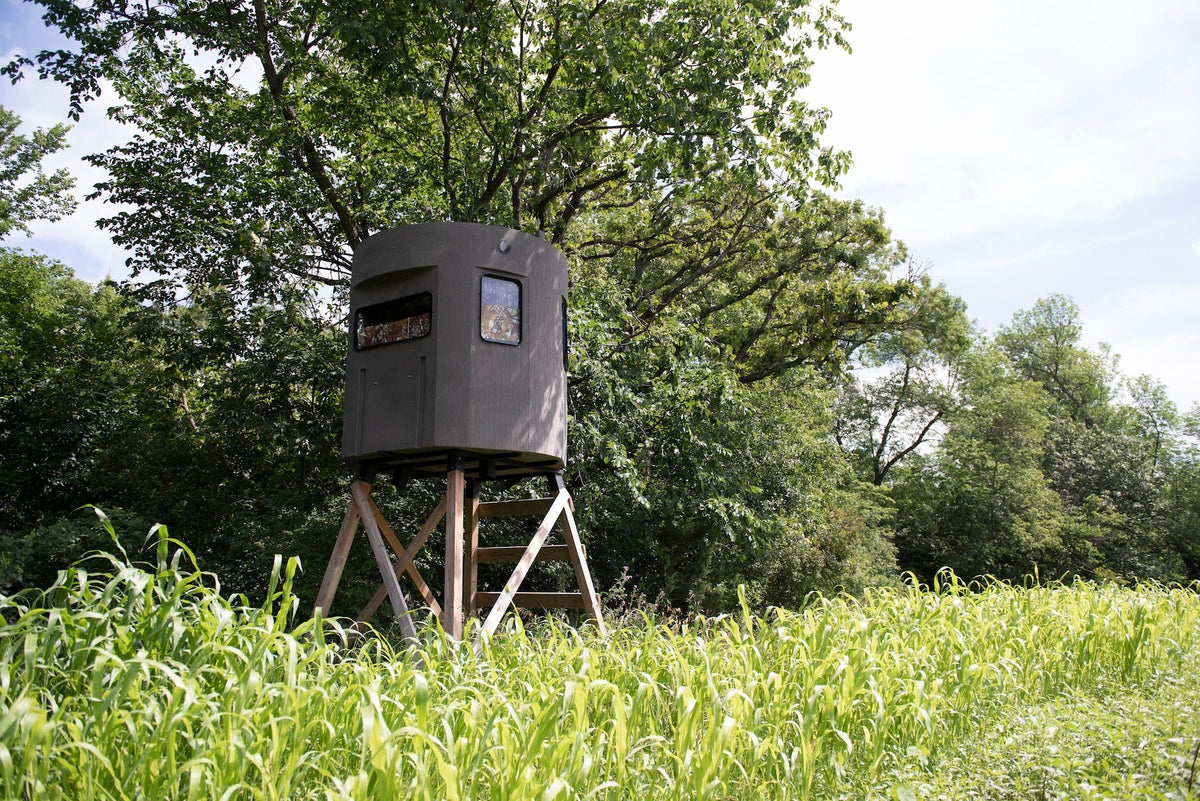
You’ll want to set up your Stump blind near these food sources, whether it’s a natural food plot or a deer feeder. You should be close enough to the plot to catch the deer as they travel to and from the food, but not so close that you’re hunting directly on top of it. You want to catch them during the approach. Our Stump blinds are easy to move around your property thanks to the skis on the bottom. So, as one food plot gets picked over, you can move the blind to a fresh one. The feeders are also portable, only needing one post to stand up in the ground. So, you can take your feeder to the blind or place your blind next to the feeder, whichever you prefer. Set up trail cameras near your property’s edge to see where the deer are coming from and triangulate a route between the entry point, the feeder and your blind based on that.
Water Systems Provide Supplemental Nutrients
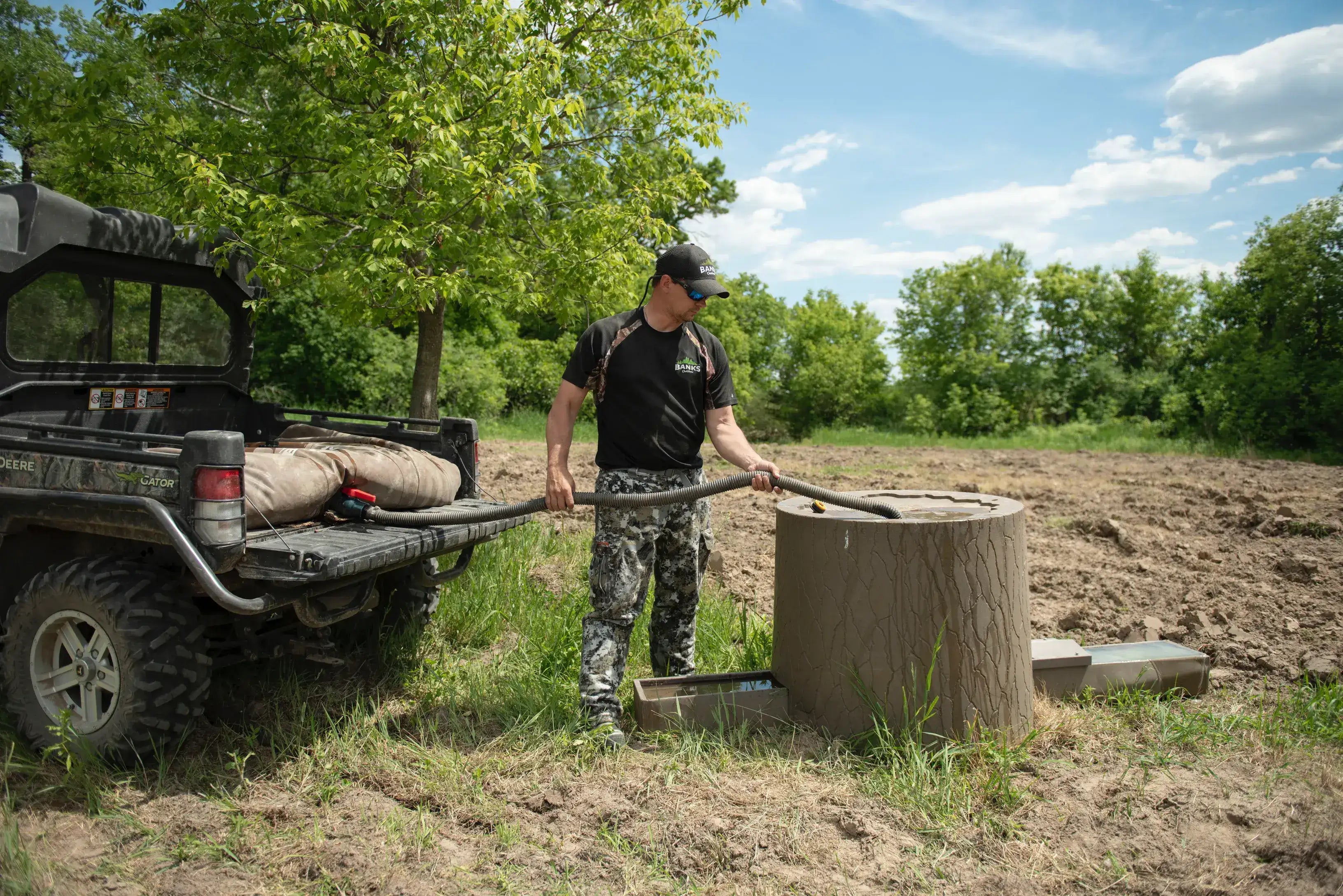
If you don’t have the means to grow a natural food plot, you can use a feeder coupled with one of our Wild Water Systems to supplement the nutrients. Our mineral supplements treat 100 gallons of water with one bag, so you can fill an entire Wild Water 100 system with one bag. The mineral bags provide the same nutrients deer will be seeking throughout these “growing” months. They’re packed with calcium and potassium to promote antler growth, and they have salt for an addictive quality.
If you can set up your blind near a food source and a water source as the deer look to replenish their nutrition levels, you’ll have a front row seat to their habits throughout the summer and you’ll be able to go into the fall hunting season with an accurate view of where to start and the makeup of the herd. Set up your blind next to protein-filled sources now and begin your recognizance for the fall!
Where do you set up your blind as spring comes to a close? Do you adjust your placement based on deer food preferences? Let us know in the comments below!


Predator Management Strategies Around your Property
Summer Water Needs: Why Reliable Water Sources Matter More Than Ever