

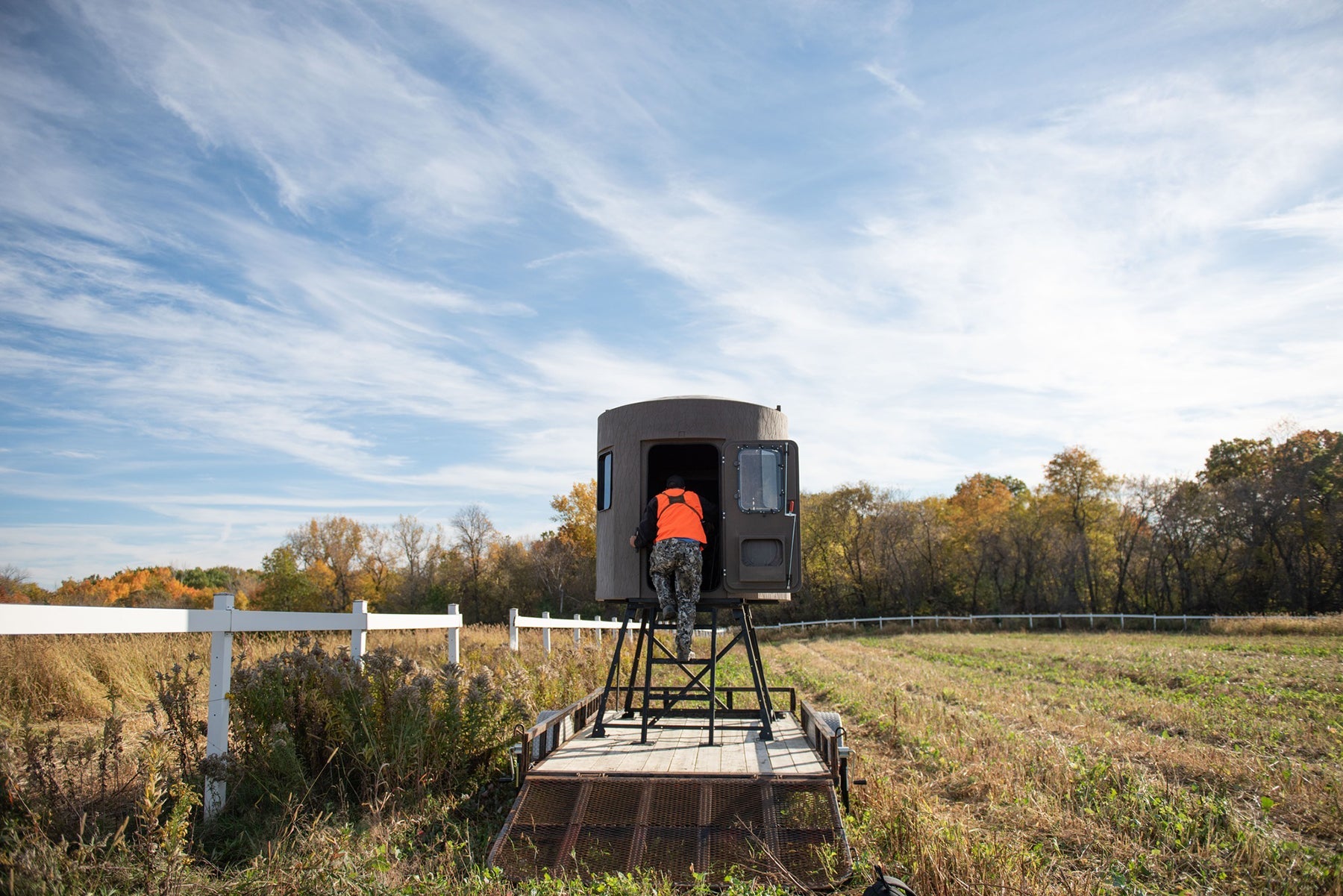
Spring is the start of deer fawn season, so it is the time to focus on predator management on your property. You want to control the coyote and bobcat population before they can get to the fawns. We’ve got some strategies for how to control those unwanted predator animals before they affect the deer herd.
Areas of Cover
Make sure the deer and fawns have places to hide. Your property should have areas of thick cover. This will not only attract the deer for bedding area purposes, but it will double as a hideaway from coyotes and bobcats. If you don’t already have those areas of cover on your property, you can curate them by cutting down some tree branches and leaving them on the ground to make makeshift dens. If you do this, just make sure the deer can get out, you don’t want to block their path from another bedding area by opening up a new one.
Creating these areas of cover can also be beneficial to your shooting lanes. Be strategic and cut down the trees that need to be thinned out to make clear shooting lanes. Leave enough foliage for cover, but not so much that you inundate the entire forest floor with cover and inadvertently block out the sun. You want to make sure the sun can still get through the canopy to encourage growth of not only the wildlife fawns, but the local flora and fauna as well. (Fawns…fauna…some nature humor for you there.)
Hunt More Game
You can also keep the fawns safe by hunting the predator animals. There is no limit to the amount of coyotes you can hunt in Minnesota. They’re unprotected in the state, so the bag limit is limitless. Normally, legal hunting hours in Minnesota are from half an hour before sunrise to sunset, but there is an exception for coyotes. Coyotes can be taken at night, with the aid of any form of light, from Jan. 1 to March 15. Our new Hybrid Headlamp is perfect for hunting outside daylight hours. It comes equipped with a red LED light, 650 lumens, an waterproof index of IPX6, and up to 12 hours of battery life. So, while the coyote exception is over for this season, make note if it for next year and continue to hunt coyotes during the day through the remainder of spring. Then, break out the headlamp for deer season.
Bobcat season is only about a month long in Minnesota, spanning from Dec. 12 to Jan. 17, so you won’t be able to hunt them during the spring fawn season.
Trail Cameras
Surveillance is always a good start to figuring out what’s going on your property. Keep your eye on your trail cameras to track any coyotes or bobcats and see if they come around at the same time as the fawns. Knowing where the coyotes and bobcats are roaming will help you know where to place those areas of cover. Set up your trail cameras along typical deer travel routes and near your Feedbank Gravity Feeders to see if you can catch the predators.
As the deer fawn population begins to grow and roam around the woods and forests, they’ll start crossing paths with coyotes, bobcats and other predator animals. Make sure you’re keeping those animals in check to keep the ecosystem in balance and so that the deer fawns have a fair chase chance.
How do you protect deer fawns from animals like bobcats and coyotes? Let us know in the comments!


Fawn Season: Reducing Pressure and Supporting Herd Survival
Late Spring Blind Placement: Where Deer Are Shifting as Food Preferences Change