

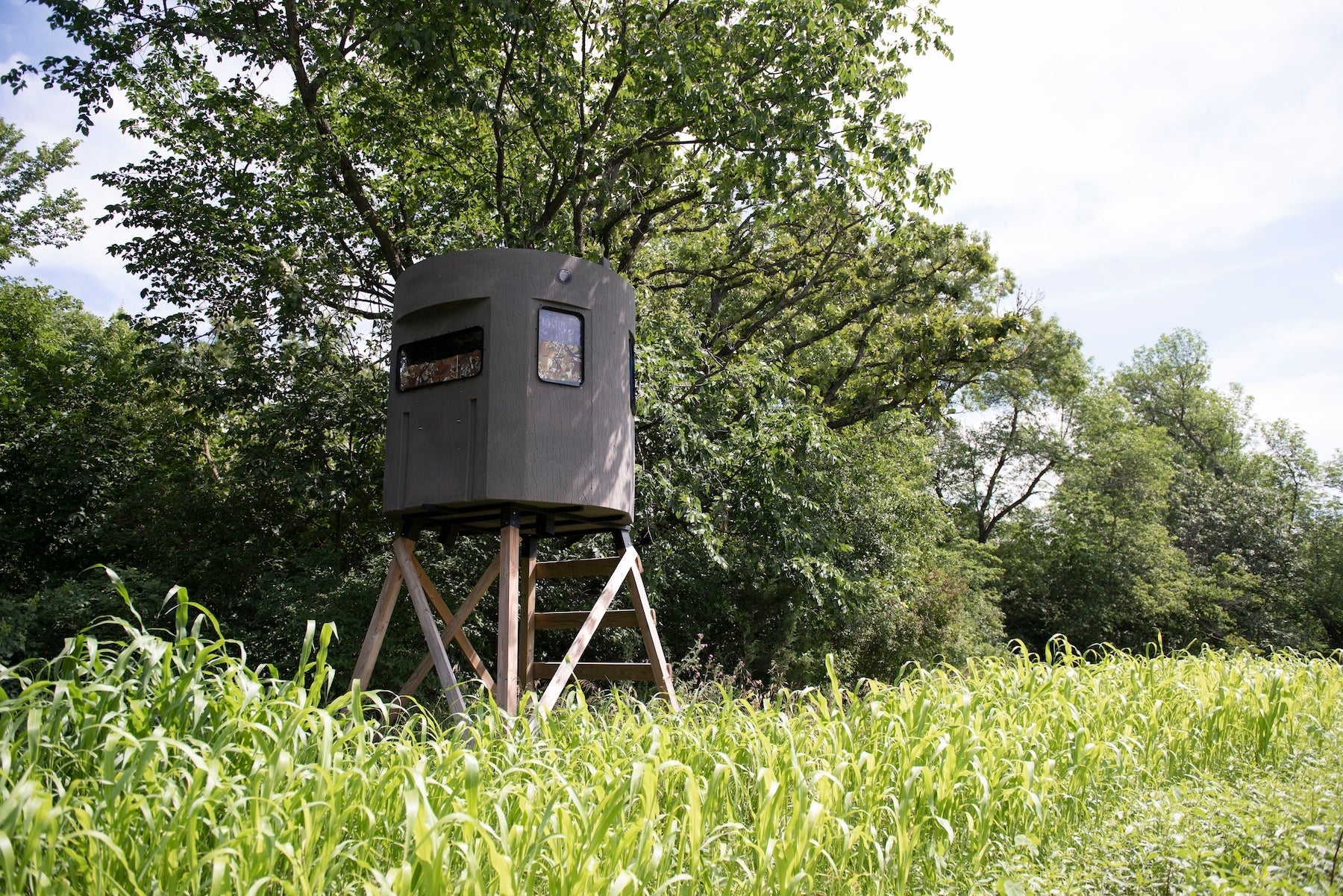
Our Stump blinds provide a natural concealment, but you can up the ante even more by “brushing in” your blind. Brushing in is the act of using natural vegetation and foliage on and around your blind to further disguise the blind from wildlife. The extra concealment will help you remain stealthy has you enter the fall hunting season. Check out our tips for brushing in, below.
Allow Enough Time for Scent to Dissipate
Placing your Stump blind and brushing it in during the summer months will allow for enough time for the deer herd to acclimate to the blind your property and accept it as part of the landscape. It will also give the blind enough time for any inadvertent hunting pressure or scent association to dissipate before opening day.
Match the Environment
They key to brushing in your blind is to make your blind look like its part of the natural landscape. Our Stump blinds are already made out of a natural grey/green color that blends into foliage, but you can help it along by placing shrubs and branches from the surrounding forest area on and around your blind. Place stray branches on the ground, throw vines over the top of the blind, whatever is in the area, place it near the blind.
Natural Lines
Another key element to disguising your blind is for it not to have the trademark square lines of a building that the deer will associate with humans. You’ll want your blind to have clean edges and lines that look natural next to the trees. Our Stump blinds are already made with a circular design that is intended to mimic a tree stump. So, the blind will look inconspicuous next to the other trees in the woods. Placing branches and foliage that purposely hangs over the edges will only further soften and disguise the blind.
Don’t Have to Worry About it Damaging Blind
Whether you simply place the foliage around the blind or you secure it in place with zip ties, ropes or other anchors, you don’t need to worry about damaging the blind. Our Stump blinds are made from a solid polyethylene material, so the sharp edges of branches won’t damage or puncture the blind like they would with a fabric blind.
Important on Flat Property
Though placing the blind among trees will allow it to blend in seamlessly, you can still disguise your blind even if it’s placed in the middle of a hunting property without any trees. By simply taking natural foliage from anywhere you can, you’ll give the deer a sensory and tactical association between your blind and nature.
Make Sure Your Lanes are Still Clear
After you’re done setting up the cover, make sure you haven’t obstructed any of the windows of the Stump blind and that you still have clear shooting lanes.
Now’s the Time
The end of summer is the perfect time to brush in your blind. It will give you time to set up your blind exactly how you want, without worrying too much about your scent. There will be enough time for your presence and scent to fade from the area before hunting season opens on Sept. 19 in Minnesota.
Do you brush in your blind every summer? What do you do to make your blind blend into the landscape? Let us know in the comments below!


Trail Camera Placement Guide for July and August
How Water Systems Shape Summer Deer Patterns Across Regions