


Turkey seasons opens here in Minnesota on April 15, which makes now the perfect time to start scoping and scouting for your spring turkey harvests. Check out our tips, below, for where to find the turkeys and how Banks Outdoors products can help you in your search.
Scout their Favorite Terrains
Like deer, turkeys have their favorite types of terrains and landscapes that they gravitate toward. They prefer ridges, rivers, edges of habitats, and open fields. Check out any areas on your hunting property that have these elements and set up a trail camera to capture the action. If you’re planting your own food plot, now is the time to do so. The fresh plot will be a perfect mix of a habitat edge and open field. The food plot will bring turkeys to your property now, during their active season, and will encourage deer to come back in the fall.
You can dial in your sights further by focusing on large, mature trees in these areas. These trees make an ideal roost site for the birds. They go for large trees with lots of thick leaves and heavy branches so that they’re covered up and can sit on a branch that will hold their weight, especially when multiple turkeys roost in the same tree.
Check their Food Sources
Once you’ve planted your foot plot, check the edges of them for the turkeys that are capitalizing on the recently planted crops. Turkeys love eating freshly planted crops. They also like to dig up insects that hang out around these crops. The turkeys will also be beckoned to the food plot when they’re fresh and full of dirt to conduct their “dusting” rituals. Turkeys need to keep their wings and feathers clean and free of oils so that they can fly up and down from their roosts. Matted feathers stunt their aerodynamics. So, they roll around and cover themselves in dirt to soak up any oils on their feathers. This process also helps smother any parasites that might have attached themselves to the feathers. A dusty food plot will be the perfect place for this.
If you don’t have the means to plant a food plot on your property, you can set out a Feedbank Timber feeder. The feeders hold up to 500 pounds of feed and have four ports stationed flat on the ground, making it easy for the turkeys to get to it. You can fill the feeder with sunflower seeds and corn to bring in the flock. Check to make sure supplemental feeding is legal in your area.
Watch From Your Stump Blind
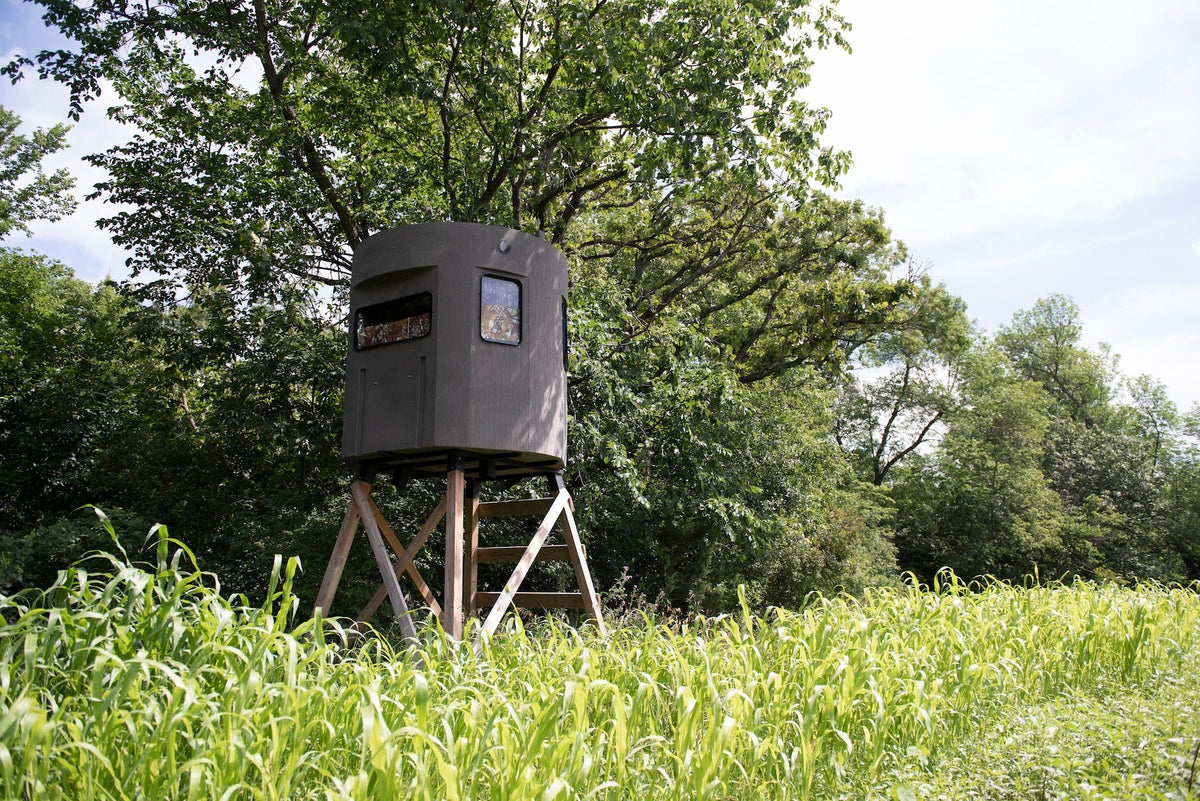
The doors and windows of our Stump blinds seal tightly, ensuring that none of the scent or sound escapes the blind. The tight seal also helps regulate temperature. All of these features make it perfect for turkey scouting. You can head to your blind before sunrise to catch the turkeys coming down from their roost without having to worry about the cold morning air or having to stay silent. You can bring a friend or family member with you and have a nice bonding experience while you wait for the turkeys to reveal their spot.
As you begin to scout for the spring turkey season, make sure you have your Stump blind, Feedbank Timber feeders, and other Banks Outdoors accessories ready to make sure you can identify the birds before opening day. Observing the birds now will set you up for success and plenty of wild game for your dinner table.
How do you scout for turkey season? Let us know in the comments below.


Spring Maintenance Checklist for Your Banks Outdoors Hunting Blind
Setting Up Water Systems for Big Game as Temps Rise