

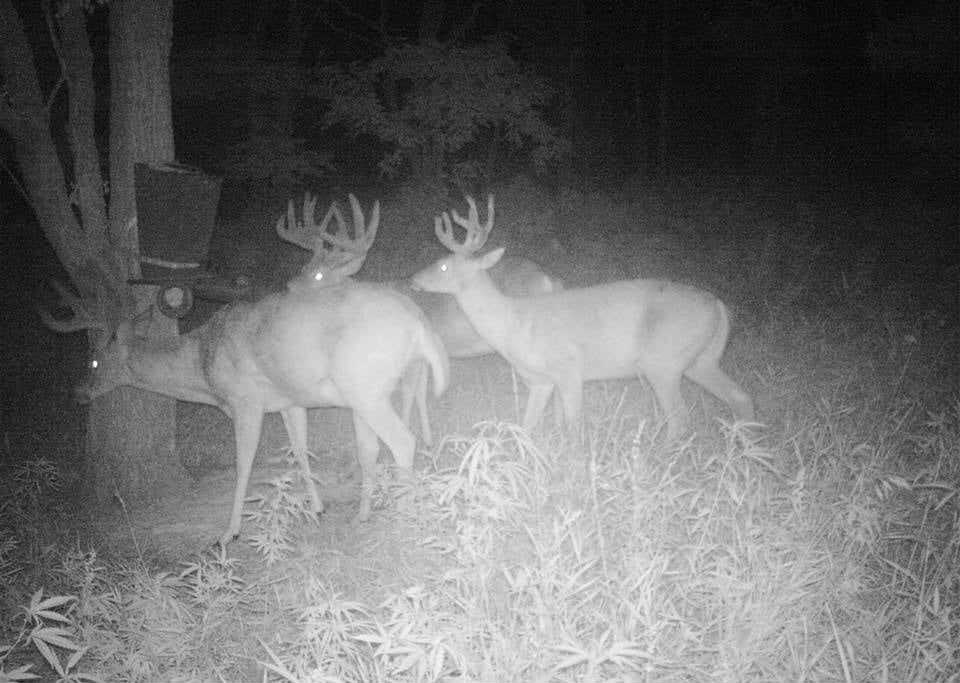
As bucks age and mature, they start to develop antlers that grow and shed on a cycle every year. During late summer, there’s a time frame where the deer have grown their antlers, but they’re not yet fully developed. They have a coating of fur known as “velvet” that covers the bone of the antlers underneath. Having the velvet on their antlers causes bucks to behave differently as they accommodate the growth during their overall cycle. Our tips, below, will help you understand these velvet-cycle routines and territories.
Their Antlers are Sensitive
The velvet that covers the bucks’ antlers is full of thousands of blood vessels, which makes them very sensitive when they’re scraped or bumped. The velvet coating protects the developing bone underneath until it has solidified. Antlers grow from the inside out. The inner layer of bone is spongy, like the cartilage in our ears, and directs nutrients and hormones to the outer layer, which is a denser bone. Think of the velvet like a scab. As new skin begins to form, the dried blood on top of the wound forms a scab to protect it while the new cells develop underneath, then when the wound has healed and there is new skin, the scab on top sluffs off naturally. It’s the same with antlers. The velvet will eventually dry out and the bucks will scrape them off and/or let them fall off naturally to reveal the fully developed antler underneath. Bucks will try to avoid bumping their antlers on trees and other debris as much as possible. This means that you might not see them digging though areas of low hanging branches. They’ll still seek out areas of shade, so make sure the sites you’ve curated have wide openings that allow room for their antlers.
The sensitivity will also cause the bucks to be skeptical of bumping their antlers on deer feeders with logs of legs. Our Feedbank Gravity Deer Feeders only have one post, eliminating the possibility of the deer knocking the velvet against the tripod legs that are common in other feeders. If you have one of these feeders, you could make yourself part of the bucks’ velvet-season routine.
Seeking Out Minerals
Antlers require specific nutrients in order to grow and develop properly. Our Wild Water Mineral Supplements have some of these key nutrients: calcium, manganese, zinc and selenium. Adding one packet of our supplements will treat 100 gallons of water in a Wild Water System. Once you’ve added those supplements, the bucks will begin to associate your property with a reliable water source and keep coming back as their antlers grow. If you supply them with these minerals all summer, you could see some bucks with well-developed antlers in the fall.
Hormone Cycle
As noted earlier, hormones filter through the antlers and help stimulate growth. The bucks’ testosterone levels begin to increase in the spring, which is what kickstarts antler growth. They even out during the summer, so the antlers develop steadily. Fun fact: Antlers are some of the fastest growing bones in the animal kingdom. Antlers can grow as much as 1 inch per day! Then, their testosterone levels spike in the fall, kicking off the crazy whirlwind of activity as they scrape off the velvet and begin to look for mates.
So, what does that mean for you? As we close out summer, you can expect the bucks to keep packing on the protein and nutrients for the next couple months. Keep your feeders and water sources stocked to capitalize on this growing season and set yourself up for success in the fall. As always, check to make sure supplemental feeding is legal in your area.
How do you accommodate a buck’s growing antlers? Let us know in the comments below!


Summer Habitat Projects That Pay Off in Fall
Trail Camera Placement Guide for July and August