

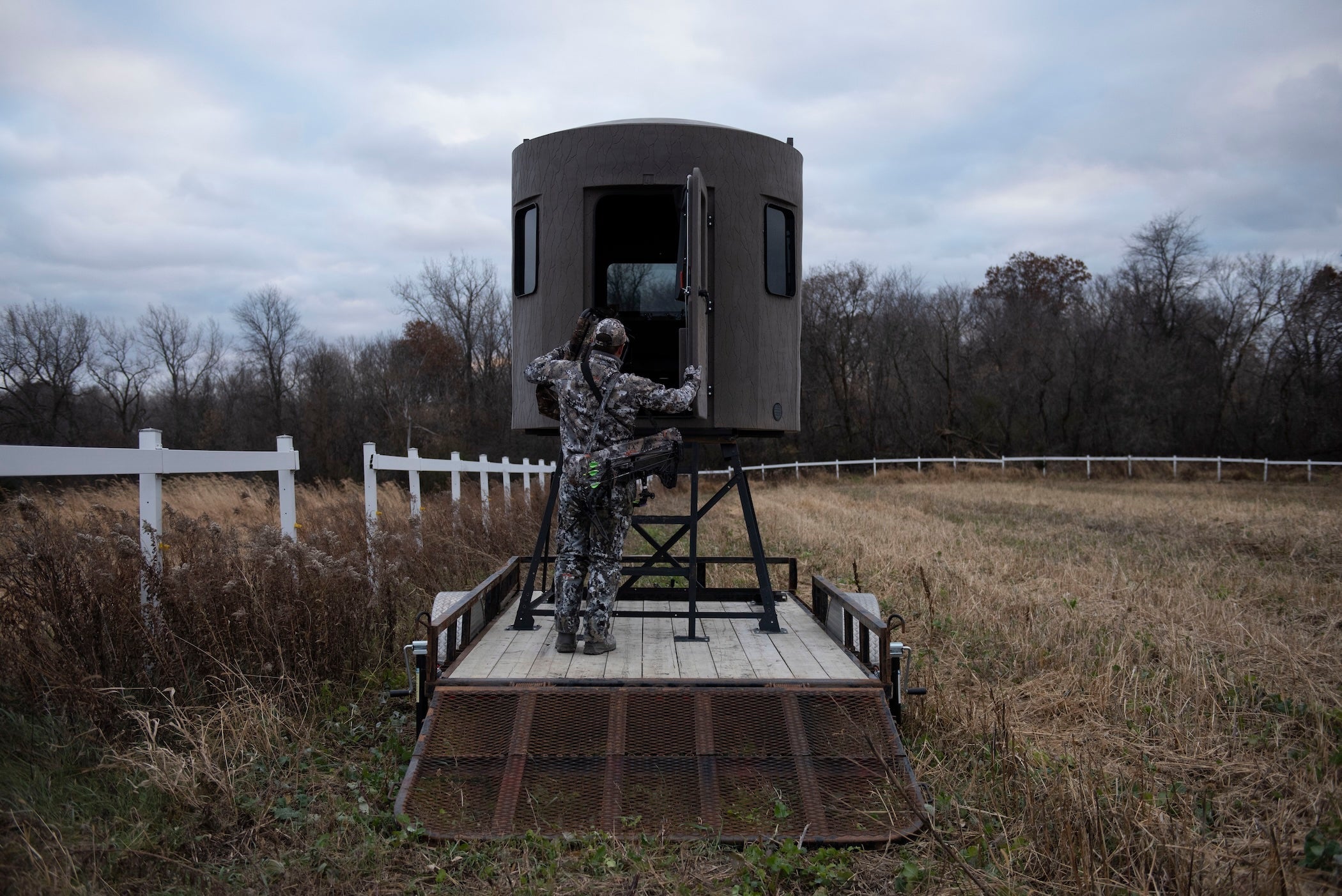
As we enter the last week of hunting season in Minnesota, it’s a great time to reflect on what you learned throughout the 2025 hunting season and how you can improve for next year. As you venture out to your Stump blind for one more hunt before the New Year, set aside some time in the blind to take stock and make notes for the next deer season and go into 2026 with fresh ideas, a clear direction and action items to help make the most out of next year’s hunt.
Was My Scouting Accurate?
If you’ve been keeping track of where you’ve harvested your deer throughout the year, compare it to your notes from your scouting endeavors and see if you predicted behavior correctly. How close were the signs from where you ended up harvesting the deer? Did a new pattern reveal itself that you weren’t expecting? Use your map from this year to help direct your scouting efforts for next year. A trail camera is always a big help in showing you deer behavior at all hours so you can scout the most active times and make sure you’re there to get in on the action.
Do I Need to Practice?
Analyze whether there were certain areas of your shot process that could use some work over the off season. Did you struggle at an elevated angle? Pull out a 3D target and practice from your elevated Stump blind to get used to the angle. A rangefinder can help show you the distance to the target, but you’ll need to calculate the distance to account for the elevation. The formula is  where “a” is the horizontal distance from the blind to the target, “b” is the height of the blind, and “c” is the diagonal distance to the target. Run your distances through this formula and find your comfortable shooting range from an elevated position. It may be different than your usual distance when you’re hunting on foot.
Did I Manage the Health of the Deer Herd?
Study how your supplemental feed and minerals affected the deer herd’s health. If you put out more corn than usual this year, did that translate to bigger and healthier antlers? If you waited to put out feed until the summer this year, but usually put it out in spring, did that affect the herd’s health? Analyze what worked and what didn’t and adjust accordingly for next year. Keep in mind that a deer’s stomach is biologically wired to process food differently during the winter months. If you’re going to introduce a new feed, make sure to do it by the end of fall. Check out our Feedbank Gravity Deer Feeders and our Wild Water Mineral Supplements to add some vital nutrients to the spots on your property. Check your state’s regulations before you put out supplemental feed.
Keeping a hunting journal and an active hunting map can be very beneficial to the success of your future hunts. If you can track what worked well, what didn’t, and why, you’ll have the opportunity to pivot and put yourself in a better position for next year. You can use our Banks Outdoors products to help you implement any changes and start looking forward to a new year as we close the book on 2025!
What did you learn during the 2025 hunting season? How are you going to change your tactics for next season? Let us know in the comments below!


The Benefits of Late-Season Doe Management: Should You Take One?
How Deer Survive Harsh Winters in the Midwest (And What It Means for Hunters)