

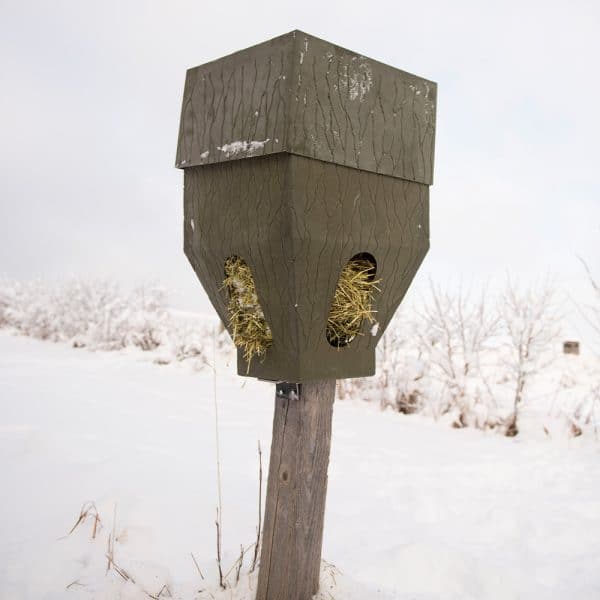
Like many animals, and certainly many humans, deer hunker down and stay in one place to stay warm during cold temperatures. Winter can be a great time to observe the deer herd’s path because you can scout them and follow them without worrying about interfering with hunting pressure. Check out our tips, below, on how to scout bedding areas when everything is frozen.
Thick Cover to Radiate Heat
Deer will seek out thick cover during the winter months. Look for areas with thick conifer trees. Conifers hold onto their leaves all year long, which makes them a great choice for thermal cover. The leaves will help absorb the heat from the sun and will radiate the heat back out into the air after absorption, so a whole cluster of them side-by-side, creating a canopy, is an ideal bedding area. Shorter trees keep the heat closer to the ground, so look for clusters of trees that aren’t too tall.
Maximize Sun
In the spirit of maximizing heat, deer will look for south-facing areas that are open to the sun so they can enjoy the heat all day from the time it rises in the east and sets in the west.
Scout During Light Snow
While deer will bed down and stay warm during thick, heavy snow, they love to move during a light dry snow. These conditions also make it perfect to track their hoofprints in the snow. Make sure you hit the travel routes as soon as the snow starts to accumulate. This way, you can be sure the prints are fresh because there likely hasn’t been time for the snow to cover the prints. These snow-prints could lead you to bedding areas, food sources, and other hotspots you never even knew were out there. You’ll also be able to tell if the deer are travelling alone or in a group because there will be multiple sets of prints.
Our Accessories are Here to Help
When you’re out scouting, be sure to carry one of our Bucket Backpacks. You’ll be able to carry back any antler sheds you might find along the way. Use our Multi-Function Hand Warmers to keep yourself warm as you move through the woods. They come in packs of two, one for each hand, and can get up to temperatures of 131 degrees. They double as a charger and an LED flashlight, so you can go out before the sun rises or after the sun sets and scout in the dark while staying warm.
Once you’ve analyzed the deer herd’s bedding areas, mark where you saw each bedding area on a map so you can go into the next hunting season with a plan. Set up your Feedbank Gravity Feeders near the new-found spots to encourage the deer to stay in those areas. Find an area on your property that matches the requirements you’ve observed in deer bedding areas and place a feeder nearby. Deer will travel until they find food sources, so if you add one near a good bedding area, you’re giving them more reasons to come back throughout the off season and into the next deer season.
How do you scout out deer signs like bedding areas when it’s cold and everything is frozen? Let us know your cold-weather tips in the comments below!


Winter Feeding Strategies: Keeping Game Close With Gravity Feeders
The Best Late-Season Blind Setups for Snow and Subzero Temps