

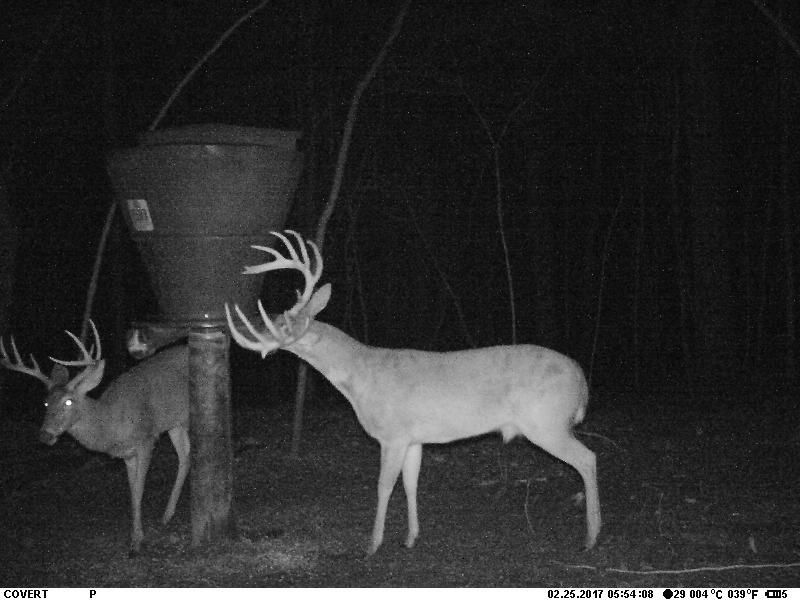
Keeping your feeders stocked during the winter months can help provide the deer herd with nutrition when their natural food sources are unobtainable. If you continue to feed your deer herd even during the off season, you’ll keep the deer on your property and create a dependency that will last well into next season. Check out our tips, below, for how our Feedbank Gravity Deer Feeders can help keep deer close this winter.
Provide Consistent Food
A deer’s natural food source during the winter is woody browse, which consists of twigs, branches and shrubs. It’s largely things that can be found without having to dig through snow to get to it. That said, deer will continue to eat their preferred sources like corn and soybeans during the winter if they’re available and/or accessible through the snow. So, if you’ve been providing the deer herd with corn and soybeans in your Gravity Feeders all year, you can continue to do so during the winter months.
Deer also love acorns, so you can fill your feeders with acorns as well. You can put anything into the system as long as it is small enough to move through the portals. Our Haybank Hay Feeder has openings wide enough for the deer to get to the hay inside the feeder without having it touch the ground. So, this is also a great option if you want to provide your herd with hay but don’t want the hay to get soggy and ruined by the snow on the ground. Check your state’s regulations to make sure supplemental feeding is legal in your area.
Protect Antlers
Our Feedbank Gravity Feeders are lifted off the ground, mounted onto a single post. The elevated ports are at a deer’s eye level, making it easy for them to smell and get to the feed. The single-post design also allows the deer to bend down to get the feed on the ground without having to knock their antlers into other posts, like they might with a tripod-style system.
Eliminating unnecessary damage to a deer’s antlers will help them stay on the deer’s head until they’re ready to fall off naturally or until the deer actively starts to scrape the antlers off. The time of year a deer drops their antlers can tell you a lot about herd health. Generally speaking, the longer a buck can keep their antlers, the healthier they are. Antlers grow when they have enough calcium and phosphorus, so if the deer have gotten enough nutrition throughout the year, their antlers will be strong enough to stay on until late spring. If they didn’t receive proper nutrition, the antlers will be brittle and will fall off late winter or early spring. If feeders are making the antlers fall off prematurely through unnecessary damage, it will be harder to tell if the antlers would have fallen off naturally.
Our Feedbank Gravity Deer Feeders are a great addition to your hunting property. They keep the deer engaged with your property year-round, help preserve antlers, and promote a healthy herd. Check out our lineup of feeders and get yours now so you can move your supplemental feed into an elevated system and help protect the herd’s antlers. Starting in the spring, start introducing new feed into your feeders and keep the deer healthy and coming back to your property.
How do you keep deer on your property during the winter months with our Feedbank Gravity Feeders? Let us know in the comments.


How Deer Survive Harsh Winters in the Midwest (And What It Means for Hunters)
Cold-Weather Bedding Areas: How to Scout When Everything Is Frozen