

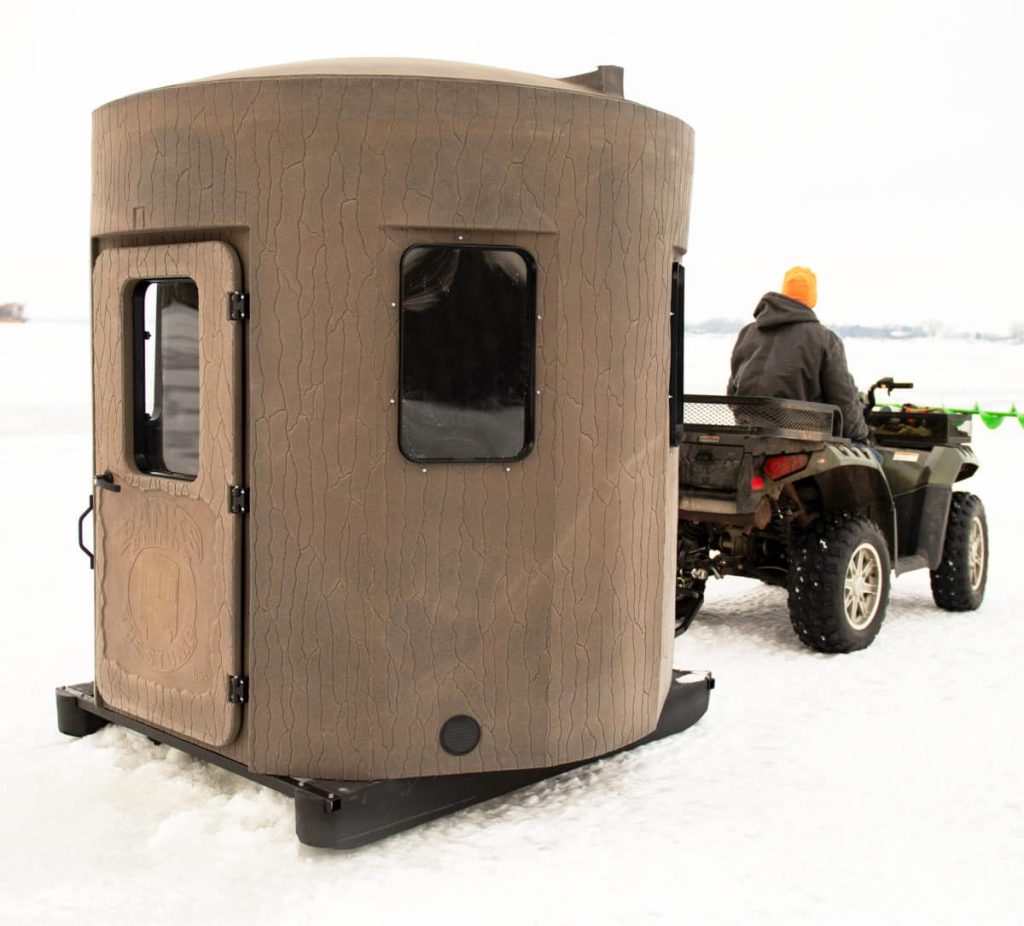
Though deer hunting season is over here in Minnesota, the late winter months can be a great time to find a new setup for your blind and observe deer behavior. You can also use our Stump Ice to capitalize on the frozen lakes and do some ice fishing, continue to use the same blind for turkey season, then jump right back into deer season in the fall. Check out our tips, below, on the best late-season blind setups for snow and subzero temperatures.
Avoid the Snow
During these winter months when snow and freezing temps are incredibly common, deer will gravitate to areas where the layer of snow on the ground is thin enough for them to still get to the acorns or other natural food underneath. They won’t dig through snow that’s too deep, so make sure you’re moving your Stump blind to areas where the snow is thin enough for them to reach the ground. Our Stump blinds come with a ski base, so you’ll be able to pull it from an area of deeper snow to an area of lighter snow with your car, truck, or ATV/UTV easily. Set up a trail camera near your blind, or even inside the blind facing out of any of the Stump blinds’ multiple windows, to record the deer herd’s behavior and see if the area you put your blind is a hotspot.
Stay Dry and Warm
The Stump blinds are made with a weather-resistant polyethylene material, so you can leave it out during these snowy months without worrying that the snow will make the blind damp and cause mildew. The material is specifically designed to resist moisture and dry quickly.
Our blinds also use a single-handle door design and don’t require any poles, stakes, or zippers. This is going to be a huge advantage when you’re getting in and out of the blind with gloved hands.
You can also mount a heater to the walls of our blinds. When you’re installing a heater inside the blind, make sure you’ve purchased a heater that’s designed for indoor use. A heater marked for indoor use will have the proper ventilation and capabilities. You can use our Muli-Function Hand Warmers to keep your hands warm on the walk to the blind and use the ports to power the heater. The warmers each have a power bank of 5,000mah.
Do Some Ice Fishing
One of the best ways you can still flex your outdoor/hunting/fishing muscles is to go ice fishing in one of our Stump Ice blinds. Our Stump Ice lineup is designed to transition between ground and ice so you can use the same blind in every hunting season. They come with two or four ice fishing holes with covers and a ski base. This allows you to have immediate access to create fishing holes with your auger, then place the cover back over the holes to transition back to the woods. The blinds have wood flooring that will keep you insulated from the ice, so you won’t have to worry about keeping your feet on the ice as you fish.
Check out any of the blinds in our Stump lineup and get yourself setup with an all-weather, all-year hunting blind in time for turkey season.
Where do you set up your blind in the snow and freezing temperatures? Let us know in the comments below.


Cold-Weather Bedding Areas: How to Scout When Everything Is Frozen
Post-Season Deer Behavior: What Changes After the Hunting Pressure Drops