


Spring is the season of deer fawn births. It’s important to keep the hunting pressure reduced and your food and water systems stocked with nutrients during this phase of the reproductive process to ensure optimal herd survival and herd health. Learn more about what you can do during these spring months, below.
Don’t Touch the Fawns
Opening your trail camera to find footage of fawns is incredibly valuable as research data. You’ll be able to see how many fawns are in the herd, track their patterns and observe their growth rate. But it should remain just that: research photos. It’s not a good idea to go track down the fawns in person, even if they seem to be alone on the cameras with no other bucks or does in sight. The doe could be coming back any minute. As soon as the fawn has a human scent, the doe will reject the fawn and will abandon it to battle the elements on its own. You want to make note of the fawns you’re seeing without actually intervening.
Keep Your Feeders and Water Systems Stocked
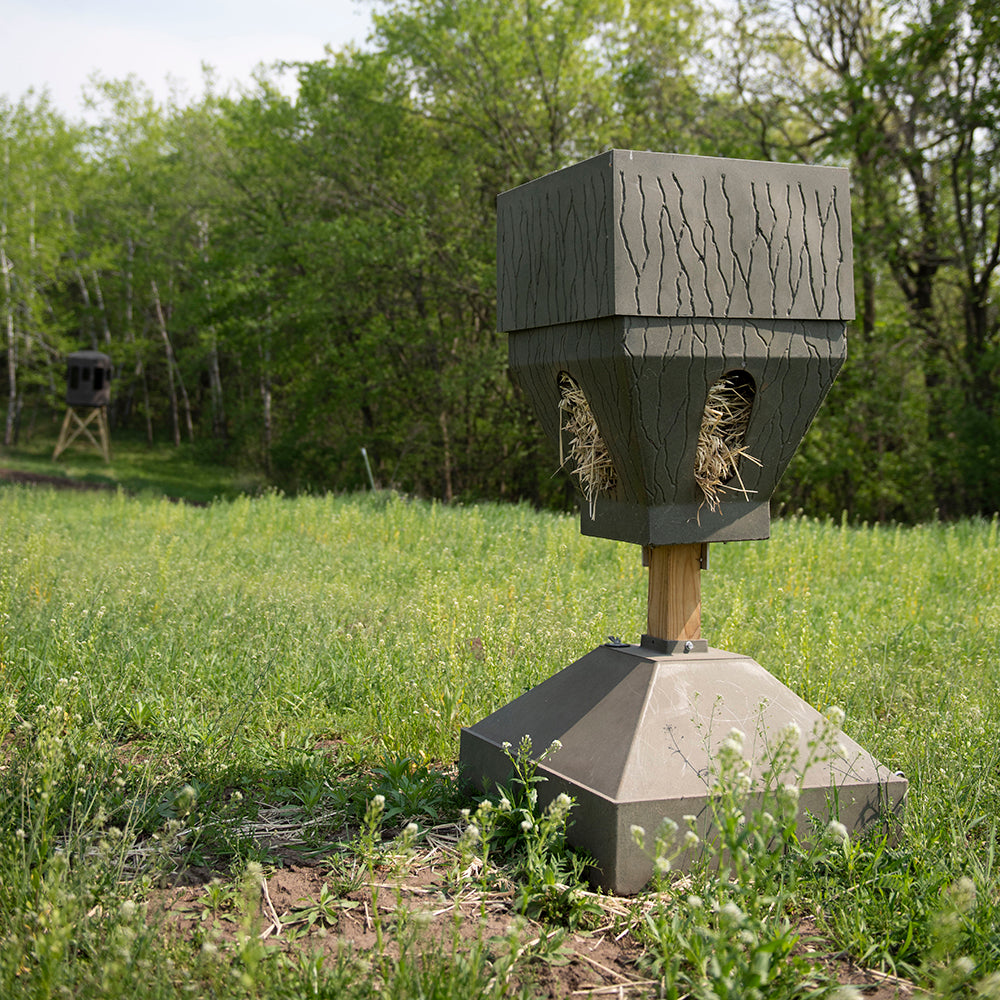
Fawns grow at a rapid rate, which means that the does need to keep their own systems strong to support the growing fawns and replenish what they’re losing through their milk. Keep your Feedbank Gravity Deer Feeders stocked with plenty of hay, seeds, corn, and other feed throughout the spring months to give the does a consistent food source. Keep your Wild Water Systems filled with water and add our Wild Water Mineral Supplements to give the growing fawns an array of nutrients and replenish the does’ nutrition levels. Each pack of supplements treats 100 gallons of water. So, if you get our Wild Water 100 system, one pack will treat the entire tank. The troughs run on an automatic valve system, so they’ll constantly refill with water when it senses the troughs are empty. This means that the deer herd, including the fawns, can come and go throughout the spring and summer and there will always be water in the troughs.
We offer a system that holds up to 300 gallons of water. The more water the tank holds, the less frequently you’ll need to visit the system to refill it, thanks to the automatic system. You can set it and leave it. This will help cut down on the amount of human activity, scent and pressure on your property, setting yourself up for a fall filled with deer activity.
Herd Health
Keeping the deer herd healthy from fawns to maturity cuts down on the possibility of disease spreading. An unhealthy deer could infect the rest of the herd. Keeping the deer herd balanced with nutrients will help ensure they’re healthy, which will in turn keep the rest of the ecosystem healthy.
If you haven’t already, now is the time to set out these systems. Fawns are born from about April-June, so by setting them out now, fawns and mature deer alike will benefit from the nutrients during the growing season. They’ll be accustomed to them by fall and will come back with strong antlers and healthy fawns, which will help keep the ecosystem in balance and disease-free.
How do you make sure you’re reducing herd pressure and supporting herd survival during the spring fawn season? Have you put out your Wild Water System or Feedbank Gravity Deer Feeder yet? Let us know in the comments below!
Spring Property Prep Without the Pressure: What to Do Right Now
Predator Management Strategies Around your Property