

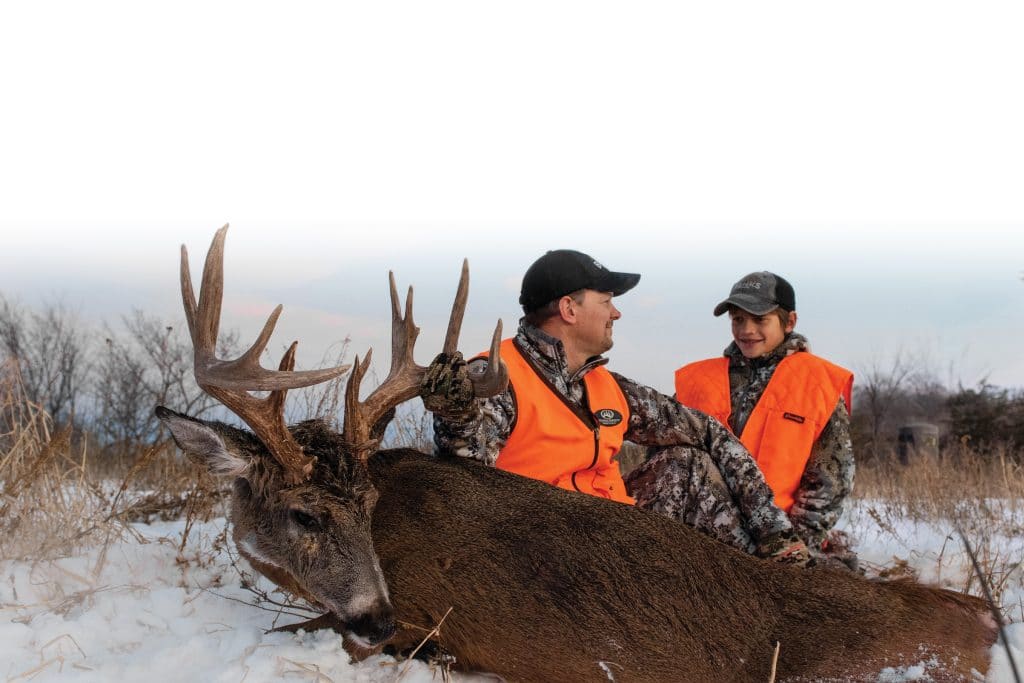
Hunting in the snow offers a lot of perks for hunters who want to take on a late-season hunt. It can reveal fresh deer tracks and muffle otherwise crunchy leaves and twigs as you walk through the woods. Learn more about how you can navigate snowy terrain during late-season hunts below.
Revealing Deer Tracks
One of the most obvious perks of hunting in the snow is that it will reveal a deer’s hoofprints. One of the best times to take advantage of this is right after or during a fresh snowfall. If you hunt while it’s still snowing, the deer tracks could get re-covered by the falling snow. This could actually work to your advantage because when you do see a deer print, you’ll know it’s extremely fresh as it hasn’t had time to become covered again. See if the tracks lead you to a bedding area and mark the path on your map.
Revealing Deer Bedding Areas
The snow will also help reveal deer bedding areas more easily. It will be easier to see a deer’s imprint in the snow than it is in grass. Check ridge lines between water sources and food sources for possible bedding areas. The path between these will be a primary route for the herd. Pay attention, though. If you notice other hunters’ blinds or stands in the area, it may be heavily pressured, especially as we get later into the season.
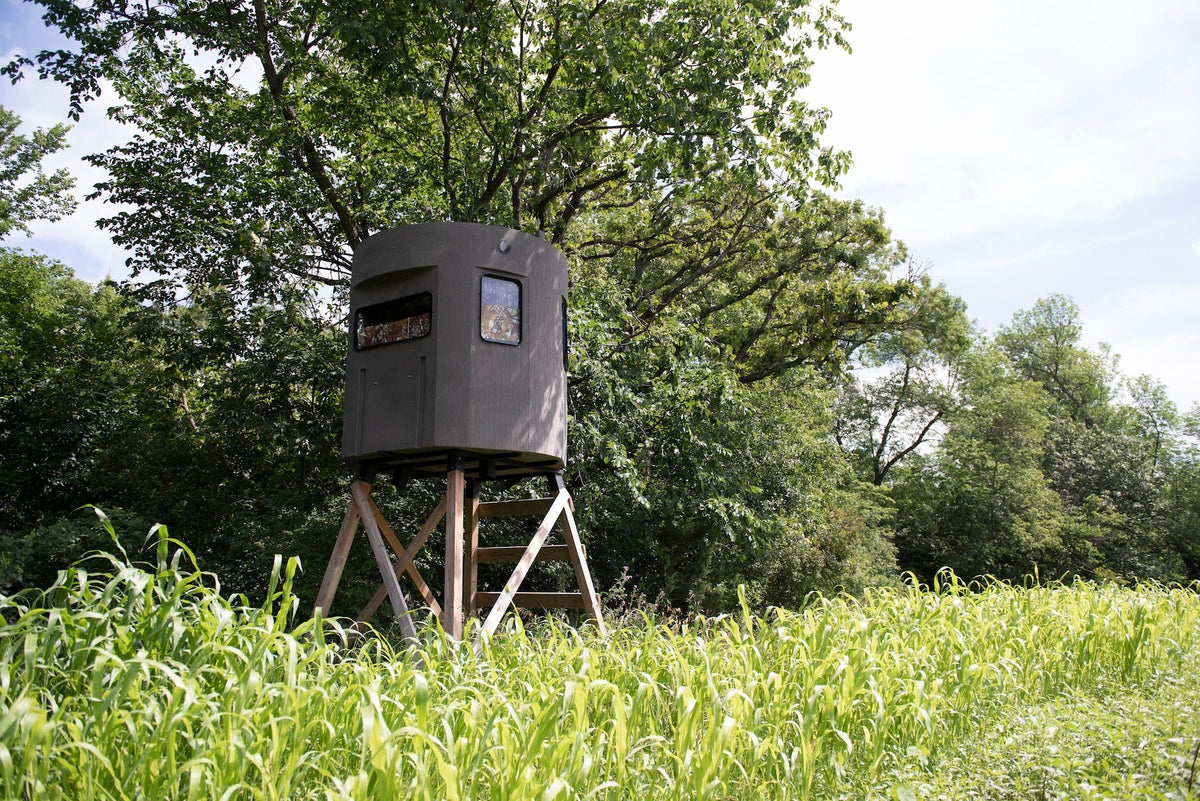
Once you’ve discovered these paths, hurry up and grab your Stump blind and move into the area. Our Stump blinds are easy to pull behind an ATV, so you can quickly hook it up with the steel hitch and use the skis on the bottom to bring it to the prime spot you just discovered.
Muffle Steps
Fresh, light snow could also help aide in dampening the sound of your footsteps as you walk through the woods. During the fall months, when there are fresh leaves on the ground, you run the risk of crunching all of the fallen leaves in your path. Granted, the sound of crunching leaves won’t immediately let the deer know you’re a hunter, they could think it’s another animal, but it will put them on high alert. Walking through snow gives you a way to smoothly and relatively soundlessly walk through the woods.
Light Snow
Light snow also has the added benefit of being the deer herd’s favorite time to move. Deer hunker down during heavy snow, but they love to move during light snowfall. If you hunt during this time, you could see an uptick in deer activity.
Stay Warm
While you’re looking for these signs, make sure you’re staying warm by dressing in layers and using our Mult-Function Hand Warmer. The hand warmer heats up to over 100 degrees. It doubles as a flashlight so you can scan the paths in the early morning or early evening even if it’s dark outside.
Whether it’s already snowing in your area or you’re still waiting for that first snowfall of the season, navigate the snowy terrain like a pro this season. Our Multi-Function Hand Warmer will help keep you warm while you scout for fresh signs on foot.
How do you use snow to your advantage during the late season? Let us know in the comments below!


Planning for a Winter Hunting Trip: Gear and Preparation
The Hunt’s Not Over: Making the Most of Late-Season Buck Opportunities