

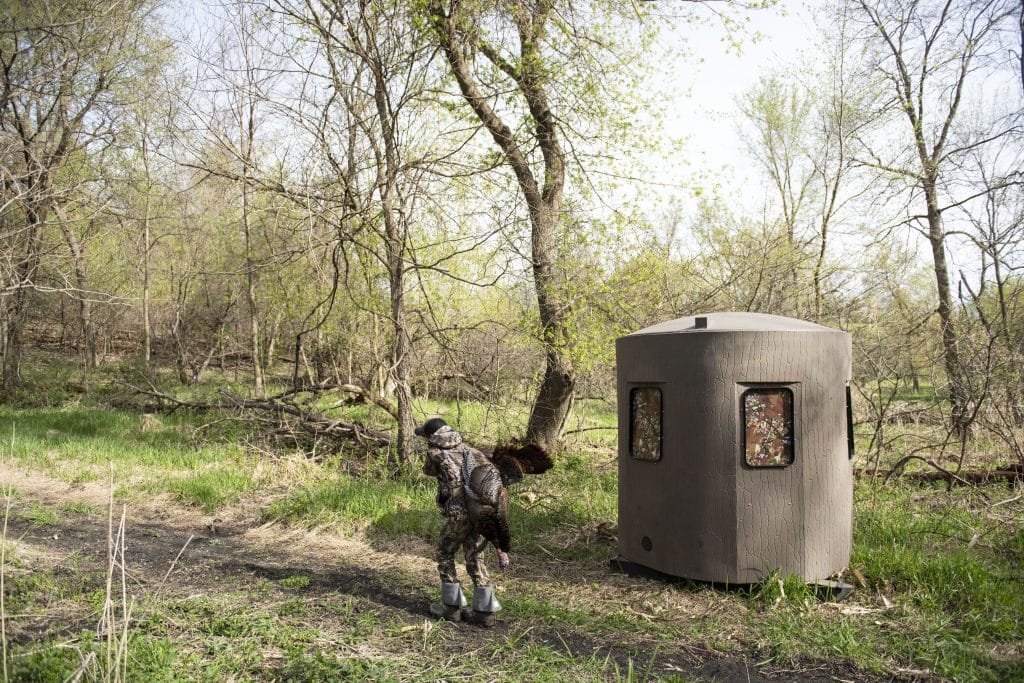
Turkeys, like deer, conserve their energy and nutrition during cold winter months. Over the next couple of months until the spring turkey hunting season opens on April 16, turkeys will choose how they expel their energy wisely until they build their reserves back up again. Check out our tips below for the key turkey behavior changes to expect before the spring season opens.
They’ll Stay in the Roost
To conserve their fat stores, turkeys will avoid moving around and burning precious calories unless it is absolutely necessary. They will often stay in the same roost for days to avoid unnecessary movement. They’ll select conifer trees that produce needles year-round, like pines and spruces, so that they can be insulated from the wind, snow and other elements. Turkeys will stay in the trees and wait out a snowstorm until the ground is clear or solid enough to walk around on.
Surface-Level Food
When they’re able to come down from the roost, they’ll seek out food sources that are easy to find in the snow. If you have a Feedbank Gravity Deer Feeder, that would be a prime choice for turkeys because the feed will sit on top of the snow and be easy to peck at. Make sure you’re keeping your feeders full in the off season not just for the deer, but for turkeys as well. Nuts and seeds work well as double-duty feed types that are enjoyed by both deer and turkeys. Make sure supplemental feeding is legal in your county before placing a feeder. Once you determine it’s legal in your county, select your Feedbank Feeder and get started.
The Feedbank Timber 500 is a perfect choice for turkeys because the three feed ports are on the ground. The lid is watertight, so you won’t have to worry about melting snow affecting the feed inside. Once you’ve placed the feeder, use our Trail Runner 62 Trailer, new for 2025, to transport your feed. The Timber 500 holds 500 pounds of feed, and the Trail Runner Trailer will make filling it a breeze. The trailer is crafted out of durable, roto-molded UV-stabilized polyethylene, and can haul up to 1,500 pounds, so you can fill multiple feeders at once without having to make multiple trips back to the house.
Observe on Trail Cameras
Set up trail cameras around your feeder to see if the turkeys are eating the feed. This will help give you intel into the makeup of the flock so you can plan your decoys and calls accordingly. If you see a lot of young jakes, placing a lot of aggressive tom decoys might scare them off and is probably not the best move. Winter is going to be the time when the flocks are the largest since they’re sticking together in the safest trees and near food sources to wait out the winter snow. Flocks of toms tend to stick to themselves with other flocks of toms, but flocks of jakes will hang out with flocks of hens and take this time without opposing toms to show dominance. As winter gives way to spring, the flocks will slowly disperse. When it gets closer to spring, hens will start to look for places to nest and brood for their spring poults.
Keep these behavior changes in mind as we transition from harsh winter to spring over the next couple of months. Our Banks Outdoors products can help you observe these behaviors and prepare for the upcoming spring season.
What key behavior changes do you notice in turkeys before spring? Let us know in the comments below.


Winter Archery Practice: Staying Sharp in the Off-Season
The Evolution of Turkey Call Techniques: What’s New for 2025