


Spring is the prime time for two different types of wild game for two distinct reasons. It’s the perfect time to introduce new deer feeders and it’s also the perfect time to hunt and scout turkeys. Check out our tips, below, for maximizing this season and monitoring both turkeys and deer for a double dose of wild game.
Deer Feeders
As we slowly move into spring, the deer herd will be looking to get back to their usual feed of crops and various seeds. Planting a food plot or providing corn and seeds in one of our Feedbank Gravity Deer Feeders will help transition them back to their preferred food sources. Their bodies have a hard time digesting new food in the winter, so now that they’re out of their self-preservation state, their digestive systems are ready for new foods in addition to going back to their favorites. So, if you didn’t introduce food onto your property last season, now is the time to do so. They’ll be drawn to your property as a reliable food source and will keep coming back into the fall hunting season.
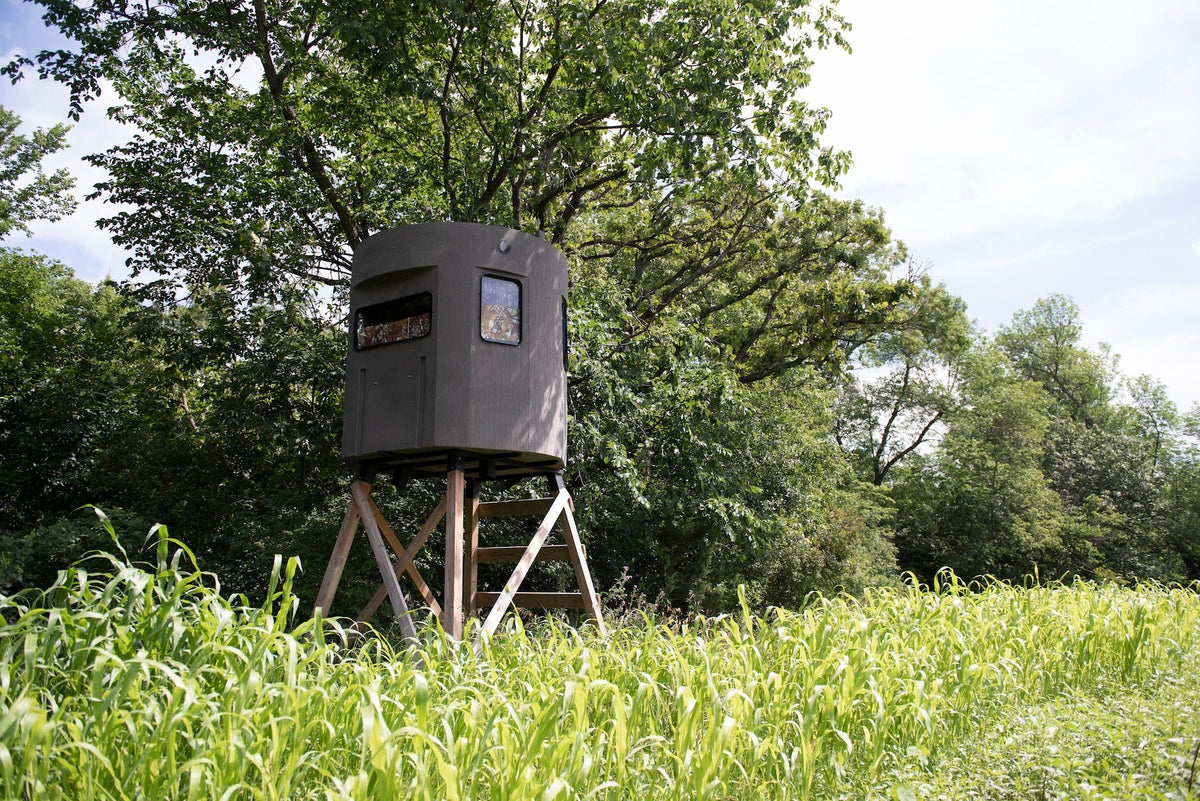
Since it’s not active hunting season for the deer, you can take this time to move your feeder around to different areas of your property and use trail cameras to test out which area is attracting the most deer. Then, you’ll be able to place and set up your Stump blind near that area and let the deer get used to it before hunting season. There will be plenty of time for your presence and any pressure to wear off before the season opens.
Turkey Dynamics
A turkey’s breeding season is usually around February or March in the southern states and March or April in the Northern states. This means that we are currently smack dab in the middle of the season. The season is kickstarted by the longer days and warmer weather which, in turn, revvs up the turkeys’ hormones. An unusually warm or cold spring could affect the timing slightly, but these are the typical guidelines. During this time, the male turkeys will be looking to attract the female turkeys by strutting and gobbling. Much like the deer rut season in the fall, this is when the turkeys will be actively trying to find a mate.
Turkeys have a pecking order to establish dominance within the flock. Male turkeys and female hens have separate pecking orders. The pecking order mainly applies to the flock itself and is a little more lenient when it comes to territories. Two flocks could have overlapping home ranges, but there is still a pecking order within those individual flocks. Young turkeys, or poults, establish this pecking order almost immediately after they’re born in early summer and have it locked in by fall.
Combine What You’ve Learned with Using our Stump Blinds
Minnesota’s spring turkey season opens soon, on April 15. Use the breeding season to your advantage as it overlaps with the hunting season. Observe how many dominant toms and jakes you have in your area through trail cameras or scouting from our Stump blinds and place turkey decoys accordingly. If you have a lot of timid jakes, avoid placing a tom decoy in a dominant position. Alternatively, if you have a dominant tom, placing a dominant tom decoy could attract him to your blind for a possible fight. Scout and hunt turkeys from our Stump ground blinds for maximum stealth and comfort this season and enjoy wild turkey on your dinner table all summer.
How do you navigate monitoring both deer and turkeys during spring? Let us know in the comments below!


Setting Up Water Systems for Big Game as Temps Rise
Best Blind Locations for Turkey Hunting in Timber, Fields, and Funnels