


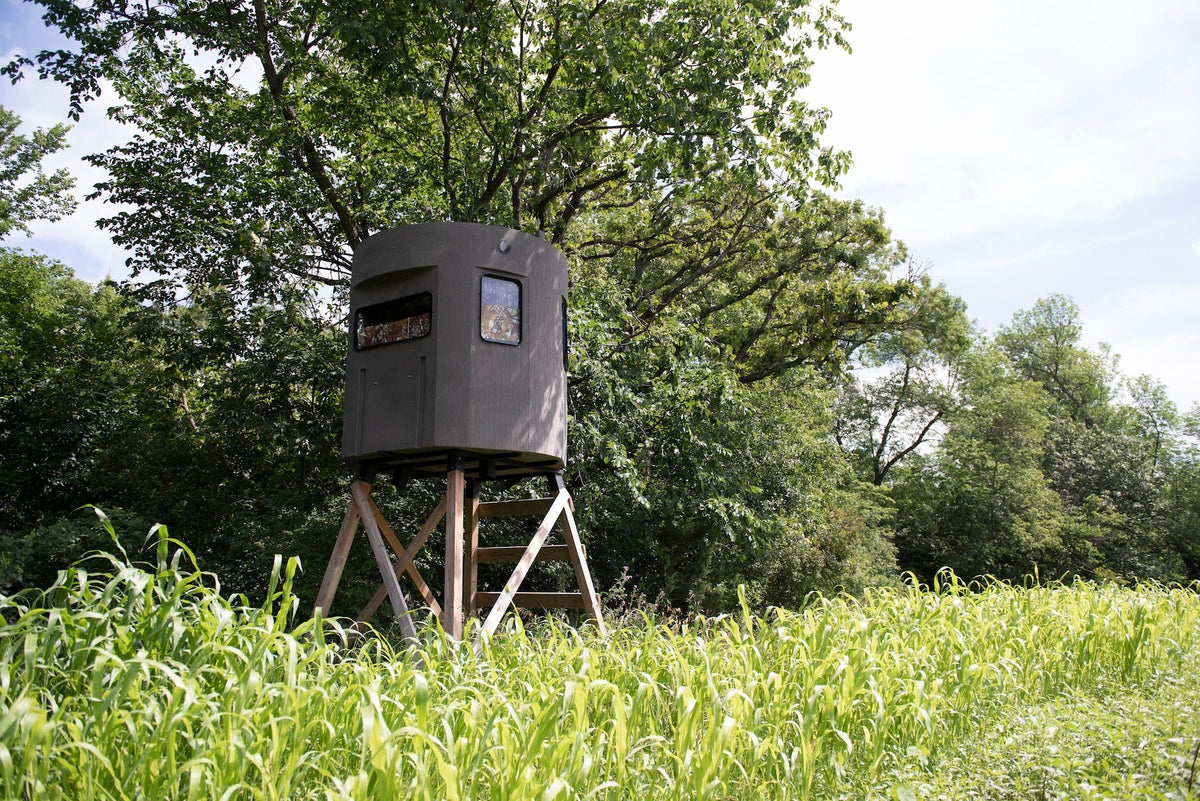
Another meteorological season and hunting season is here! Spring turkey hunting begins here in Minnesota on April 17. Scope out your property over the next couple of weeks to find the best location for your Stump blind and get it set up before you go out and bag a couple gobblers for your freezer.
Open Fields
Setting up your blind along the edge of an open field is a great place to set your sights on a gobble. While you should look for places at the edge of open fields, make sure you’re tucked away enough that the turkey won’t immediately spot you in their blind when they approach. When you call in a bird, they’re going to expect to see the bird that called them. Keep a tree, shrub or other foliage in front of you to buy yourself time to make your shot. Or, set yourself back around the corner of an open field so that you’re still calling the turkeys that frequent the open fields without being directly in front of them. If you want to stay out in the open, place turkey decoys in front of your blind so that they’ll think the decoys are the ones making the sounds.
Timber
Turkeys that move around timber might sneak up on you more than a turkey in an open field. Naturally, turkeys in an open field will be noticeable the second they come into the field. In timber, the sound of the turkeys approaching might get absorbed by the trees or bounce around and make it sound like they’re coming from a different direction than they’re really moving. Check every window in the blind whenever you hear them, just in case.
Funnels
Male turkeys like to find a ridge above a hen if they can. So, if you’re using hen calls at the bottom of a sloped piece of land, your blind will be in a prime location to funnel the toms in. Make sure you’re in a space where they’ll have room to fly down or walk down the ridge in front of your blind and still be within a shooting lane.
Our Stump blinds all have multiple windows surrounding the blind, so no matter what window you’re hunting out of, you’ll be able to see the turkeys coming from any direction and you’ll be able to reroute and move over to the other window. The Stump 4 Scout has eight windows for a true 360-degree view. Our Camo Curtain Kit offers an excellent level of coverage for any sharp-sighted birds that might spot your blind. Even if they spot your blind, they won’t spot you. Having the window open but the curtain attached will allow you to call the birds while still remaining concealed. Then, when the turkey is approaching, you can undo the curtain and take your shot.
Roll out your Stump blind to your preferred location within the next couple weeks and get ready to bag your birds. The ski base and steel hitch will let you pull the blind behind your ATV or truck to easily move it from your deer hunting spot to your turkey hunting spot so you can get some wild game in as many seasons as possible.
What are the best locations for your blind on your property? Let us know in the comments below!


Monitoring Deer and Turkey Activity During Spring
Spring Scouting: Identifying Travel Corridors Before Green-Up