

Planting seeds in your food plot in the spring will help ensure that the timing lines up so that the seeds will mature into functioning crops in the fall during deer hunting season. Check out the tips below to help you choose the best seeds to plant and act now to set yourself up for success this fall.
April: Clover
Clover is a durable seed that can be planted in soil even when it is partially frozen. A Minnesota spring when the temperatures are cold at night and warmer during the day is ideal for this plant. Clover will begin to bloom within 10 days of planting, so you’ll be able to start bringing deer to your property immediately. You should establish your food options with deer early, because deer can’t receive any new food during winter: their digestive systems can’t handle it. Introduce the food plot now so that their systems can get used to it before hunting season.
May: Corn
The best time to plant corn is about two to three weeks after the last frost of spring. In Minnesota it’s still getting down to 30-45 degrees at night, so keep an eye on the weather and look for a solid two weeks where it never drops below the freeze threshold of 32 degrees. It could be sometime in May that it warms up. Once you’re in the clear, plant your corn seeds an inch or two deep into the soil, about a foot apart from each other within the row and the rows 30 inches apart from each other. You can put a few seeds into each hole. Corn needs about eight hours of sunlight per day, so make sure you plant this crop in an open area without too much tree cover that would otherwise create shade. Trees surrounding the corn plot would be ideal so that the deer have a direct path from the woods to the plot, but make sure the corn has enough room for sun to come through.
Corn will reach maturity about two or three months after planting. So, planting the seeds in May will have the corn at maturity in July or August. This is excellent timing for the fall deer season. Deer season opens on Sept. 13, so the corn reaching maturity a month or two prior to opening day will entice the deer onto your property with enough time for them to establish a routine of finding food, water and bedding areas in the area. It will give you enough time to observe them through trail cameras and come up with a hunt plan based on the buck to doe ratio and the direction you see they’re coming from.
Feedbank Gravity Deer Feeders
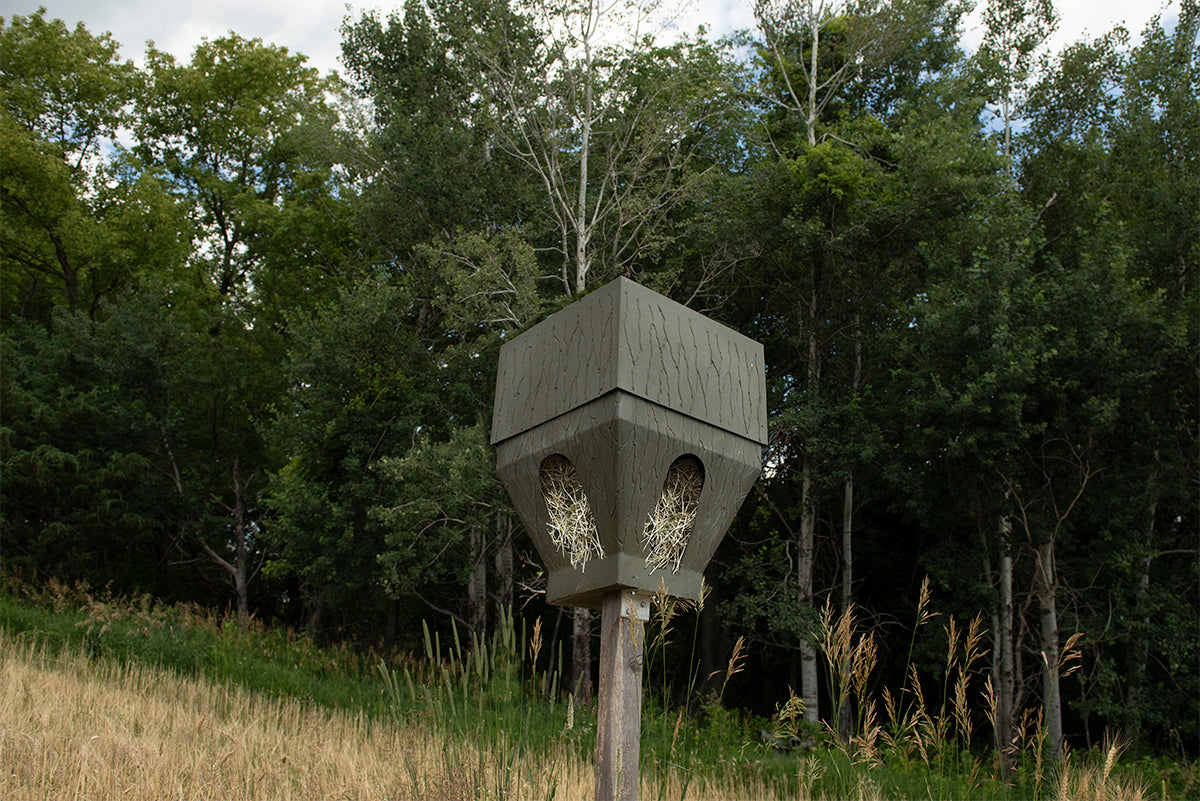
If you don’t have anywhere to plant the seeds on your property, you can offer the popular food choices in a Feedbank Gravity Deer Feeder. We offer different models that hold anywhere from 40 to 600 pounds. You can move them around your property throughout the spring and summer to monitor deer at different sections of your property. Based on what you’re finding, you can place your Stump blind in a strategic location along the path that the deer are taking to get to your feeders or food plot.
What are you planting this spring to ensure a better hunting season this fall? Let us know in the comments below!
Innovations in Hunting Blinds: What’s New This Year
Attracting and Keeping More Wildlife on Your Property This Spring