

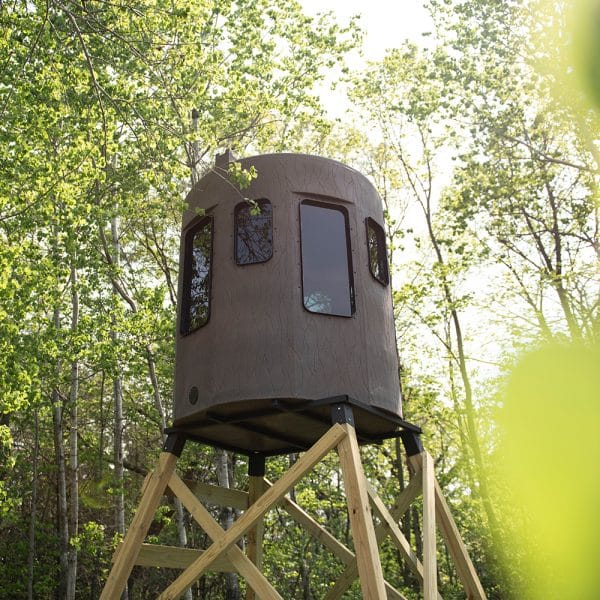
Deer season is officially in full swing here in Minnesota! Hopefully you got out on opening weekend and enjoyed some time in your Stump blind. Now that we’re officially in deer-mode, the next thing to keep your eye on is the rut season. In general, rut season tends to peak around mid-November, but it could start as early as late October in colder climates and last into February in warmer climates. No matter what region you’re in, we’ve got some tips and tricks to help you prepare for the upcoming rut season.
Be Patient
We’ll start off with something trite but true: have patience. Bucks will travel for miles during the rut, up to 7 miles per day in some states. If you set up shop inside your Stump blind and make plans to stay there for as long as you can, you’ll likely be rewarded by seeing a traveling buck. The bucks are looking for does all day, so it’s likely they’ll drop past your setup at some point.
Check Whether the Scrape is Fresh
Bucks leave scrapes in their wake as they travel among the woods to leave a scent for the does to find. The paw at the ground with their hooves to give other deer a visual marker. They’ll also urinate on the spot to leave their scent. Another prime way to leave their scent is to rub their face and antlers on a low-hanging branch above their scrape mark. Rubbing their face and antlers on the branch releases their scent from their preorbital gland on their head. The more scent, the more likely other deer are to travel through the area and investigate, so if you see a fresh scrape, stay put.
Check the Barometric Pressure
Studies show that deer move during days of high barometric pressure. Usually during a barometer reading of 30 or higher which indicates a nice, clear day. Deer can also sense a barometric pressure drop, indicating bad weather. If the pressure is dropping, that means inclement weather is approaching like rain or snow. The deer will also move during these drops to find shelter before the weather changes.
Rattling Works
Rut season makes bucks want to spar with other bucks and show their dominance. When bucks fight over a doe, they’ll lock their antlers together and headbutt each other. You can re-create this sound by using an antler rattle call. Any dominant bucks in the area will want to go see who’s fighting.
Food Sources are Always Key
We say it time and time again because it’s true: deer will always seek out food sources. If you see does at a food source, chances are a buck is not far behind. Set up your blind near the source and keep your eye out. You’ll be able to easily lower your window and draw your bow as soon as you see a buck thanks to our windows that open quietly.
We hope you got out in your Stump blind during opening weekend and already have your favorite areas mapped out for the rest of the fall season. Consider our tips throughout the fall as we approach rut season to make the most out of your fall hunts.
What are your tips for hunting the rut season? Let us know in the comments below!


Do’s and Don’ts for Hunting in the Rain
Things to Consider When Planning an Out-of-State Hunt