


Like deer, turkeys seek out food and shelter in the same place. So if you can identify areas where they can get food, find a roosting tree, and easily travel through, you’re more likely to have success this spring. Head out to the woods to find these areas or make your own sites with a Feedbank Timber feeder.
Finding Sites
When you’re looking for potential turkey hot spots, check out areas with ridges, benches, rivers, edges and open fields near wooded areas. Also look for thicker trees. Turkeys will seek out trees with thick, sturdy branches that can hold multiple turkeys from the flock at the same time. They tend to take easy routes that don’t weave through too many obstacles, so look for clear paths. The paths deer have worn could also lead to turkeys.
You can also identify active corridors by looking for signs of the turkeys themselves. Turkey tracks will have three toes, with a longer middle toe, fanned out with some space in between each toe. You can find scat and feathers underneath trees that the turkeys used for their roosting site. Investigate the dirt to see if you can find impressions where the turkeys have rolled around to dust themselves. Turkeys need to cover themselves in dirt periodically to cut down the oil on their feathers and smother any potential parasites. If you find all of the above, with scratches in the dirt where they dug for food, that is a strong sign that the turkeys frequent that area.
If you scout during sunrise or sunset, you might be able to catch them traveling to or from their roosting sites and you might even catch them flying up or down from the trees. Once you’ve identified which trees they’re using, you can position yourself along the path between those trees and the nearest feeder or food plot to catch them on the next trip. Turkeys love seeds and bugs, so during the spring when food plots are still forming and are still in the germinating stage, these natural plots will be easy pickings for them to get their grub.
Make Your Own Site
You can bring the turkeys to you by setting up a Feedbank Timber Feeder. These feeders are flat on the ground so that the dispensers release the feed directly onto the ground where the turkeys can get them. You can get them in two different sizes to hold either 250 or 500 pounds of feed. Each feeder has four ports for maximum feeding.
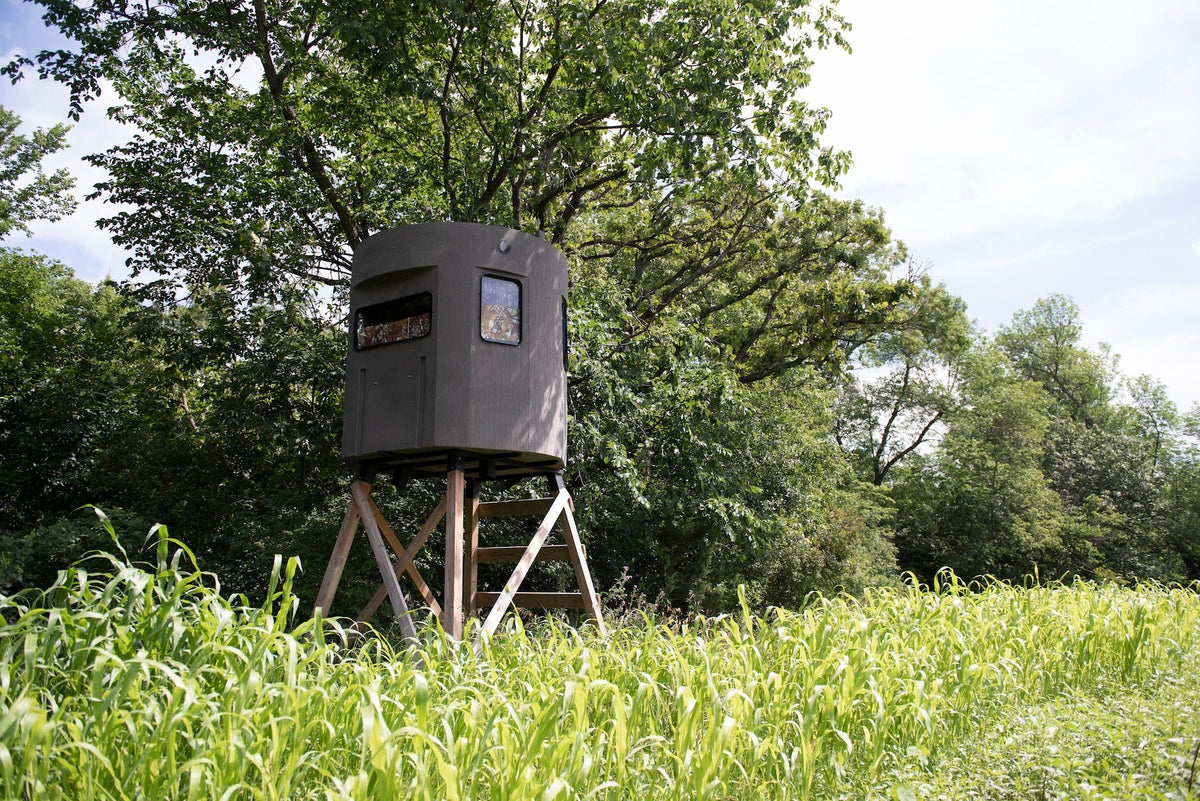
As the season approaches on April 15, scout out these ideal hunting spots and move your Stump blind into place. The Stump Scout blinds have skis on the bottom to make it easy to move across the ground and pull behind your ATV or truck with a steel hitch. The Phantom windows in our blinds will help conceal you and help protect you from the turkey’s excellent vision. Once you’ve identified the travel corridors and set up your blind, all that’s left to do is camp out and call in your next round of wild game.
How do you find turkey travel corridors during the spring to help you find your spot for turkey hunting season? Do you use our Feedbannk Timber feeders? Let us know in the comments, below!


Best Blind Locations for Turkey Hunting in Timber, Fields, and Funnels
Spring Food Plots Hunters Should Start Now