

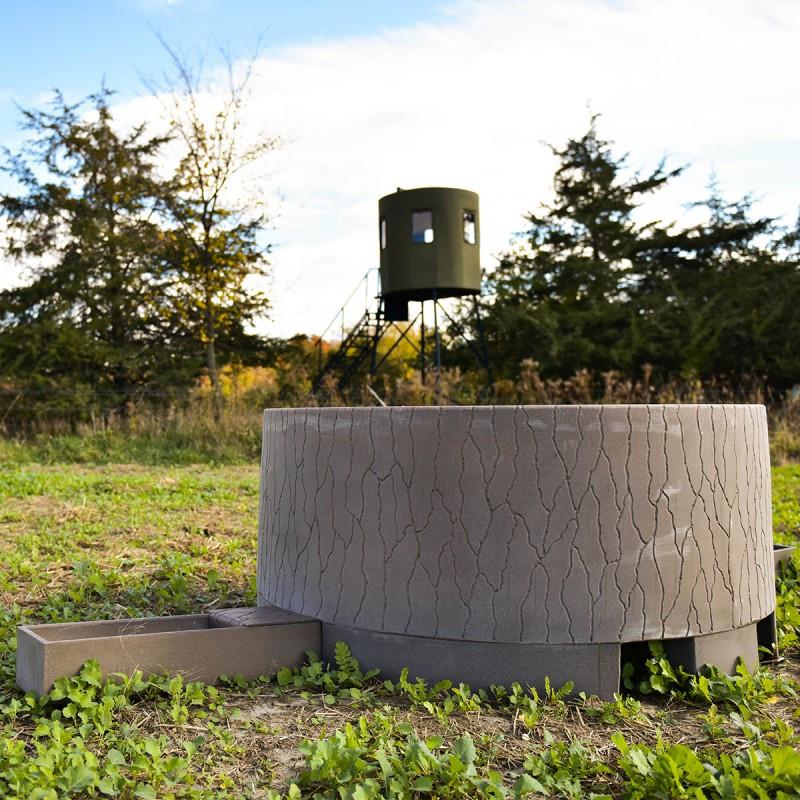
Summer heat waves affect us all, even the deer herd. As the temperatures rise, deer will begin to seek out areas of heavy shade and plentiful water sources to stay cool and hydrated. If your property offers both benefits, you’ll see the deer herd gravitate to your land all season, setting you up for an active and successful fall hunting season. Check out our tips below on how to identify these deer patterns.
They Shorten the Travel Distance
During the hot summer months, deer will find areas of heavy shade and bed down. They stay put as long as possible during the daytime to avoid the heat and will only travel short distances to go to feeding areas and water sources. So, if you have a Feedbank Gravity Feeder or Wild Water System on your property, they will likely make a bedding area near those sites so that they can focus their needs in a central location.
Protein-Rich Foods
In addition to limiting movement, deer will maximize their energy by eating protein-rich foods that give them a boost of nutrients all in one meal. They’ll gravitate to clover, alfalfa and soybeans to get their dose of protein. Plant food sources that contain these crops or fill your Feedbank Gravity Deer Feeder with the plants. Our Gravity Feeders and Water Systems each come with the option to hold 300 pounds/gallons of food/water. Filling up these tanks to capacity ensures that the deer herd will be able to find the nutrition they need when they come to your property without you having to disturb the sites. You can practically set it and forget it, limiting the number of times you’re leaving your scent in the area.
Avoiding Antler Damage
Deer shed their antlers in the spring, which means that early summer is when the antlers re-grow. Fresh antlers that are still accumulating their velvet are sensitive, so the bucks will avoid areas where they might damage their antlers. The velvet covering contains a high concentration of blood vessels and nerves, so they will understandably be cautious to hit them against anything. You might find them sticking to field edges to avoid bumping their antlers on underbrush. They’ll still seek out areas of tree cover, but they’ll be cautious. Later in the summer, the velvet will dry out and fall off from lack of blood flow once the bucks’ testosterone levels rise, so they’ll start scraping off the skin on trees like picking an itchy scab. But, until then, they’ll be wary.
Keep it All in One Place
If you keep your food and water sources filled and easily accessible, the deer herd will make their bedding areas nearby, giving you the perfect opportunity to set up trail cameras and observe their behavior. You can gather valuable information about the buck to doe ratio, gauge the age of the herd, and start to notice patterns. Providing them with nutrition will also help them grow their antlers over the summer and help stave off herd diseases. Set up any of our Wild Water Systems or Feedbank Deer Feeders and make your property the place to go for the deer herd. As always, check your state’s regulations before putting out any supplemental food sources.
What trends are you seeing in deer patterns? Let us know in the comments below!


Summer Water Needs: Why Reliable Water Sources Matter More Than Ever
Why Gravity Feeders Work Best in Summer Heat