
October and November hunts can have an array of different temperatures. It may be 40 degrees when you go out before sunrise, but by the time the afternoon hits, the temperature has climbed to the 70s. The key to dressing for a fall hunt is to dress in layers. You want to be able to put on and take away layers as needed. Check out our tips below for how you can stay warm without overdressing on your fall hunts.
Moisture-Wicking Base Layer
You should always make the layer of clothing closest to your skin a moisture-wicking layer. The moisture-wicking material will help absorb sweat. If you wear something un-breathable as the bottom layer, your sweat will drench the fabric, which will ultimately make you colder than you would be if you didn’t wear that layer at all. The wet shirt will cool against your skin as it dries and you won’t be able to regulate your body temperature underneath the rest of the layers. Your body sweats as a natural way to cool down your body temperature. While it might seem counterintuitive to think about sweating when you’re trying to stay warm, if you wear clothes that are too warm, you’ll just sweat underneath the fabric and overheat despite it being cold outside. Your body needs to expel the sweat, but not be trapped in it, to stay regulated.
Comfortable Middle Layer
For your middle layer, you can wear a comfortable, warm fabric. This fabric won’t be against your body or exposed to the elements, so it can be made of whatever you want. This can be a thick shirt, a favorite sweatshirt, etc.
Weather-Resistant Top Layer
The outermost layer of your clothing should be made of a weather-resistant material, like a windbreaker. Much like the bottom layer, you don’t want to top layer to be able to hold onto moisture. If the outer layer gets muddy or wet, it could seep through the rest of your layers and throw off your body temp. The outer layer should be able to dry quickly.
Blaze Orange Hat
Hats are one of the lowest-effort ways to keep warm. Whether it’s a beanie to cover your ears, or a baseball hat just to cover your head, they’re simple and effective. You can also use your hat to fulfill your blaze orange requirement. Many states require you to wear blaze orange while hunting, so check your state’s regulations, and if they do, wear a blaze orange hat to stay compliant and stay warm.
Banks Stump Blind
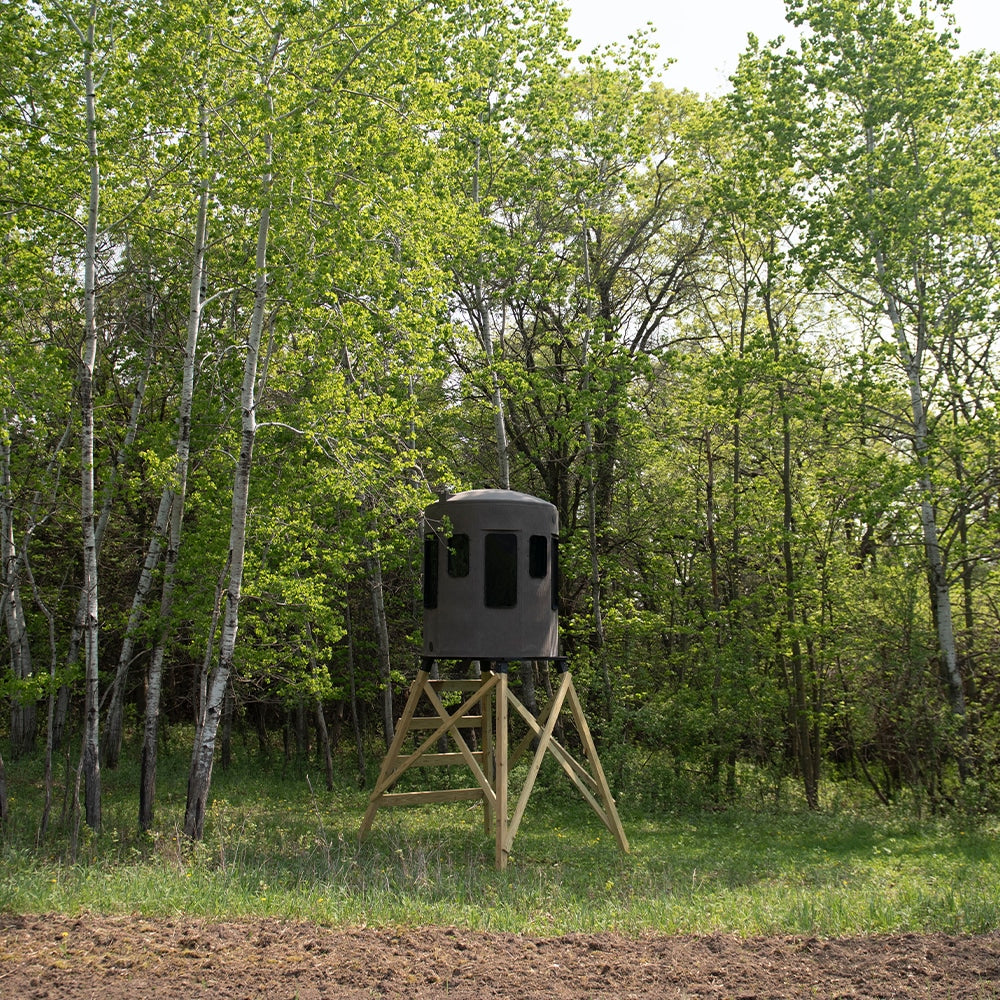
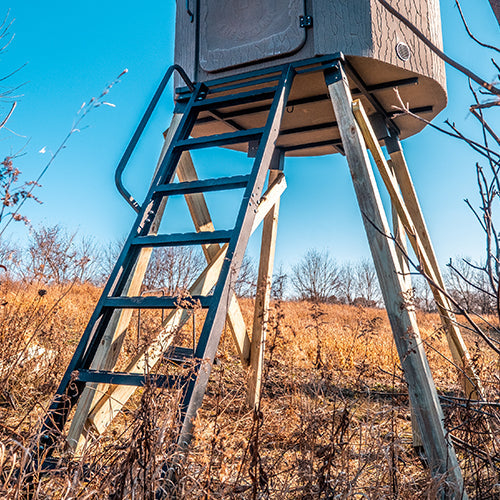
Once you’ve arrived at your Stump blind, you can take off layers and adjust to the comfort of the sealed blind. The blind will be protected from the elements, so you won’t need to keep your heavy coat on once inside. If the temps are freezing outside and you need extra warmth when the windows are open, you can place a heater inside the stump blind. Just make sure the heater you choose is designed for indoor use.
When you’re preparing to dress for your next hunt, think strategically. Avoid throwing on a bunch of warm layers. Build your layers so that you can take each layer off as necessary and allow your body to cool itself with a moisture-wicking layer. Wear a blaze orange hat and you’ll be set to enjoy hunting throughout fall.
Why October is the Perfect Time for a First-Time Hunter
The Impact of Moon Phases on Deer Activity in October