

While there isn’t any concrete scientific proof that the moon cycle affects deer behavior, that doesn’t stop hunters from checking out the moon phase charts and planning their October hunts around them. We’ve compiled some common opinions about how the moon affects deer behavior in October. Take a look at some theories below and see if you’ve noticed any of these patterns during any of your nighttime hunts.
Nighttime Activity
Hunters have noticed that deer are more active during the nighttime hours during each moon phase, specifically within two hours of sunset and sunrise. Dawn and dusk are universally accepted as hours of heightened deer activity regardless of moon behavior, so do with that information what you will.
The Moon’s Position
The moon’s actual position in the sky might have more bearing on deer behavior than the phase it’s in. When the moon is rising during dawn or dusk hours, that could give deer extra light to move around by. When the moon is a full moon, that will give the deer even more illumination during the night and you could see a flurry of activity during this phase. Take a look at the weather forecast and see if you can find a time when the moonrise times line up.
Photoperiodism
In addition to just simply being easier to see, the reason for a deer’s attraction to a bright moon could be explained by photoperiodism, which is the physiological reaction of animals to the length of light or a dark period. A photoperiod is the difference in how long a day is during different seasons. When the seasons change, the earth tilts differently around its axis which changes how much light is reflected onto Earth and for how long. This is why summer has about 15 hours of daylight and winter has about 8 hours. Photoperiodism is how plants and animals react to these changes. They’ll change their behavior and habits to adapt to the new conditions.
So perhaps deer are active during a bright moon in October because the days are beginning to get shorter and they’re holding on to any bit of light they can, even if that’s from the moon instead of the sun. While humans tend to go into “hibernation” mode and stay inside as the days get shorter, deer could be supplementing the lack of sunlight with moonlight.
The Rut
Combine the reasons mentioned above with the fact that it’s rut season and October becomes a prime time to hunt deer at night. Bucks will seek out does all hours of the day during rut season, so if the moon is bright, they’ll stretch their search out into the night.
Stump Blinds
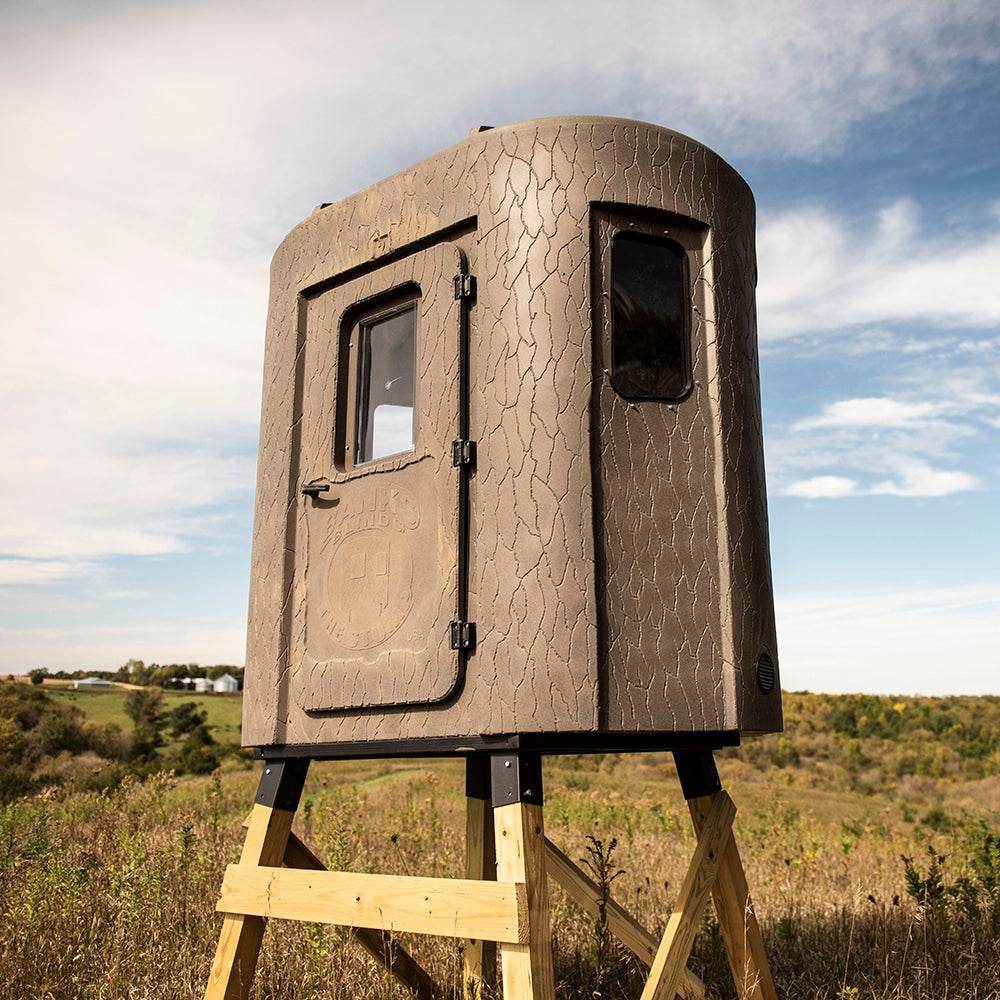
If you’re eager to get out and conduct your own moon phase experiments this fall, set up your Stump blind and see for yourself. Our blinds are very easy to move on and off a property so you can hunt during the day and come back at night to hunt the moon phase without any problems. Many states’ hunting hours are from half an hour before sunrise to half an hour after sunset, so make sure you’re following your state’s hunting regulations.
Do you think the moon phases affect deer behavior? What trends have you noticed? Let us know in the comments below!
How to Stay Warm Without Overdressing During Fall Hunts
Maximizing Your Success During the Peak of the Rut