


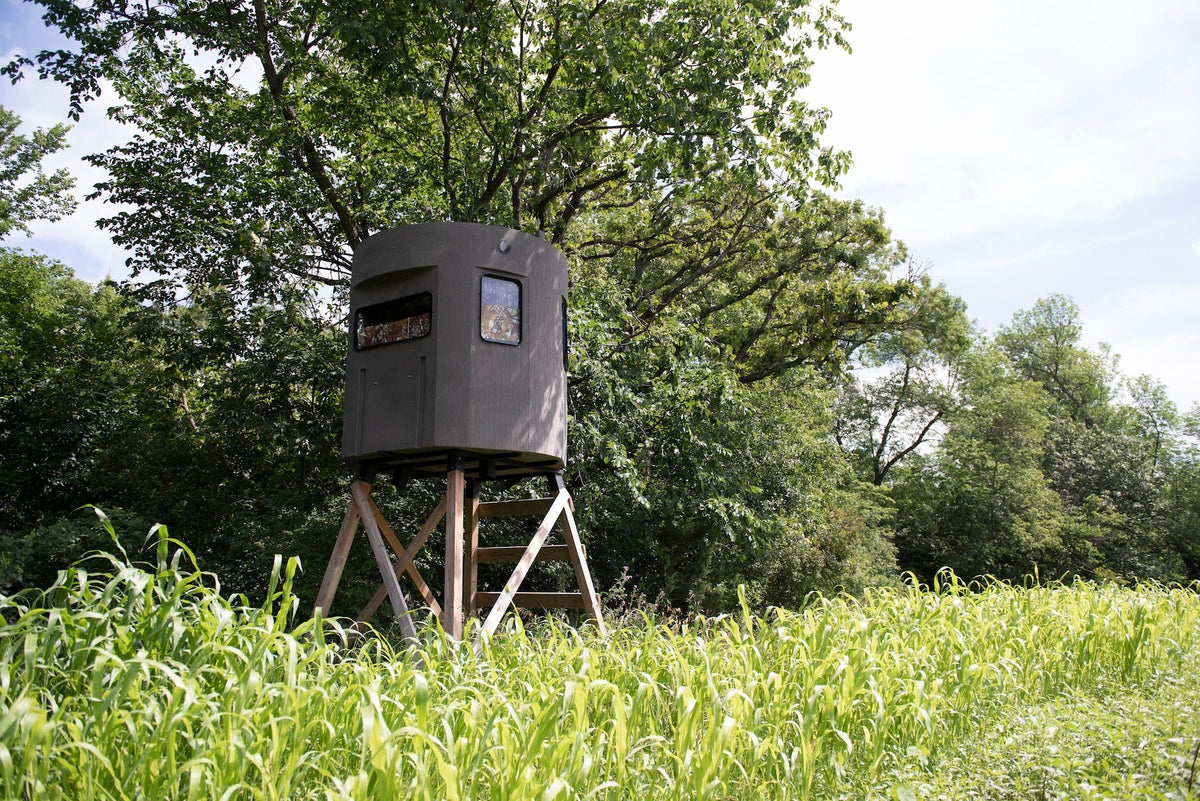
Turkey season is coming up in Minnesota on April 16. Even though that’s smack in the middle of spring, up here in Minnesota you can still feel the cold winter air lingering with averages in the 50s. So, hunters may need to continue battling the cold weather during turkey hunting season just like they do for deer hunting. Prepare yourself for cold spring turkey hunts with our tips, below, and enjoy the benefits of bagging birds from your Stump blind.
Stay Warm
First and foremost, you’ll want to keep yourself warm while you’re hunting for gobblers this spring. Our Stump blinds are heavily insulated, so once the doors and windows are closed, you should be protected from outside weather elements. Our Phantom windows open silently, so you can wait until you see a gobbler to open the window. The windows are also designed to adjust to ambient light from dusk until dawn, which means wildlife won’t be able to see into the blind no matter what time of day it is. It provides one-way viewing, you can see out but they can’t see in, so keep the windows closed as long as you need to. Turkeys have three times better eyesight than a human, so this is going to be crucial in your hunting pursuits.
If you happen to be turkey hunting during a cold winter flurry, use our new Window Visor Kit as an awning over your windows to block the snowflakes from obscuring your view. Our Multi-Function Hand Warmer can also keep you extra warm inside blind or if you’re hunting on foot.
They Stay in Trees Longer
When the weather is cold, the turkeys will stay in the trees and roost longer to conserve energy. They also don’t travel as far and may keep their roosting site within a small radius. Once you figure out where this roost is, set up your Stump blind nearby and wait for them to come down a bit after sunrise. Turkeys travel in large groups in colder weather during the winter and huddle together to stay warm. They slowly start to break off into smaller groups in the spring. Keep an eye out to see if particularly cold weather in April throws off the dynamic and keeps them in larger groups.
Bring the Gobbler Home
Once you’ve harvested your bird, put it in our Trail Runner 62 Trailer and easily haul it back to your car. It’s made with a durable, roto-molded UV-stabilized polyethylene and can haul up to 1,500 pounds. The included steel hitch makes it easy to hook it up to your ATV. This will be huge help in cold weather or during a spring snowfall. Check your state’s regulations to determine how many turkey tags you have for the spring season. Minnesota regulates one bearded bird for the 2025 spring turkey season. Minnesota also prohibits the use of hunting dogs for turkey hunting.
Hunting from a Stump blind will definitely keep you warm during cold northern spring days. Pay attention to how the turkeys are responding to the cold and plan your hunts accordingly. If you keep yourself warm and pick the right hunting spot, you’ll be filling your turkey tags in no time.
How do you prepare to turkey hunt in cold weather? Let us know in the comments below!


The Evolution of Turkey Call Techniques: What’s New for 2025
What Makes a Great Turkey Hunting Spot