

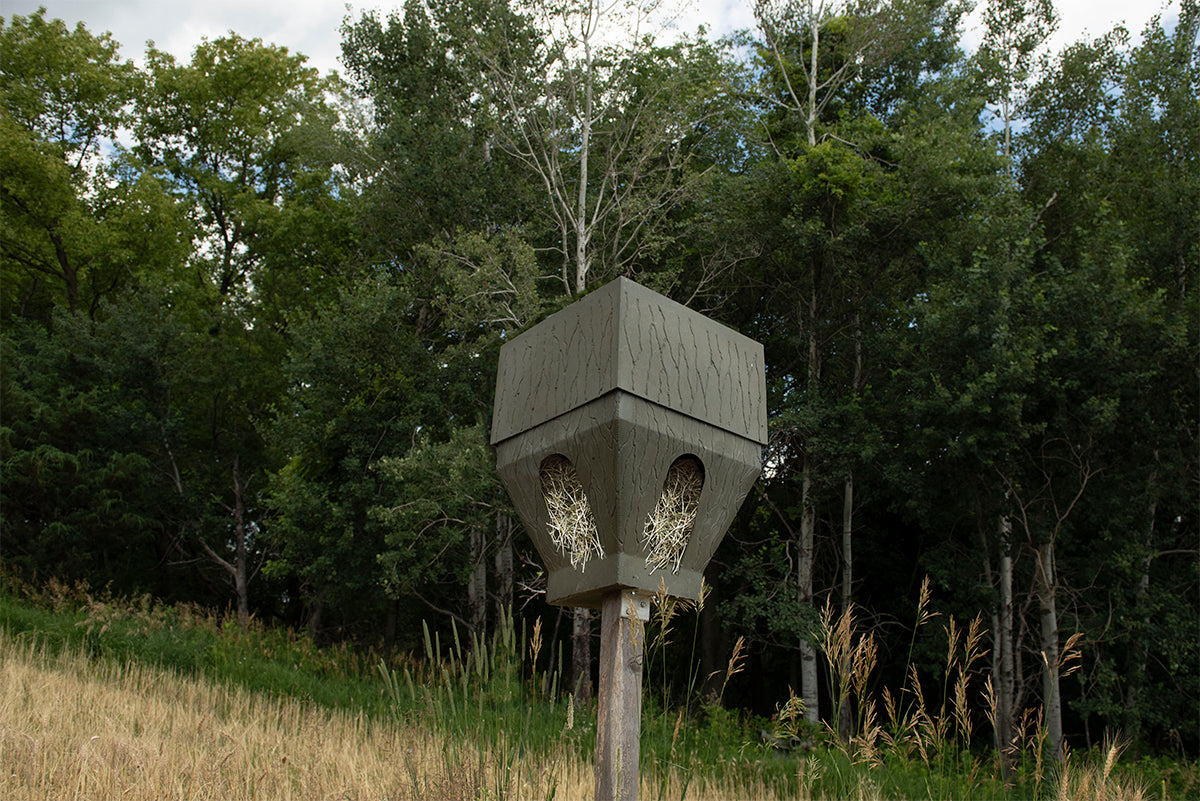
In February, the temperatures are still cold and there is still snow on the ground, so the deer will conserve their energy during this last winter push and hold onto their vital fat stores until it’s over. They’re starting to drop their antlers, so as you continue to offer them bedding and food sources, start looking for antlers on the ground around your property.
Feedbank Gravity Feeders Will Attract the Herd
When there’s a lot of snow on the ground but not a lot of crops available, deer will group together and go to the same source. They need to conserve all the energy they can while the temperatures are this low, so they gravitate toward food that’s easy to find. This means they’ll gravitate toward anything above-ground that they don’t have to dig for. If you put out our Feedbank Gravity Deer Feeders, the deer will likely flock to the feeders because they’re easy to get to and reliable.
The multiple ports in our feeders will allow for multiple deer to eat the feed at the same time. This is key during this timeframe where all the deer are vying for the same food sources. You want to be able to bring as many deer to your property as possible and capitalize on being the only place that has the feed. You’ll get bonus points with the herd if you offer crops that are normally found nearby, but they just can’t get to it. Like cornfields that are currently buried, etc.
Using a simple feeder is key to not damaging a deer’s antlers. They need to have room so that their antlers don’t knock into anything as they eat. During this late winter timeframe when deer are starting to lose their antlers, you don’t want them to drop unnaturally. If the deer wants to scrape their antlers against the post and they fall off, that’s alright. That shows that the antlers were in a position to need to fall off. The deer would have brushed off their antlers on a tree or something else in the woods if they didn’t visit your feeder, so having it on your property will make it easier for you to recover the antlers and observe its health.
They Stay in Bed
The deer will stay in their bedding areas where it’s warm to continue battling the cold temperatures and lack of food. Seek out areas of thick cover and areas with access to warm sun. If your property has both bedding areas and a food source, that’s a great combination to keep deer on your property. As temperatures start to rise again, the deer will slowly return to a more active lifestyle, but until the snow melts and more food sources show themselves, they’ll continue to be very cautious with their energy and stay in bed when they can, going to known food sources.
As we make it through the (hopefully) last cold month of winter, keep your feeders stocked. As natural food sources become more and more scarce under the snow, your feeders will become gold. Stock your Feedbank Gravity Feeders through February and start looking ahead to what you’re going to plant in your food plots in spring.
What deer trends do you notice in February? Let us know in the comments below!

How to Use Feeders to Support Herd Health Before Spring Arrives
Shed Hunting Starts Now: How to Prep Trails and Food Sources