

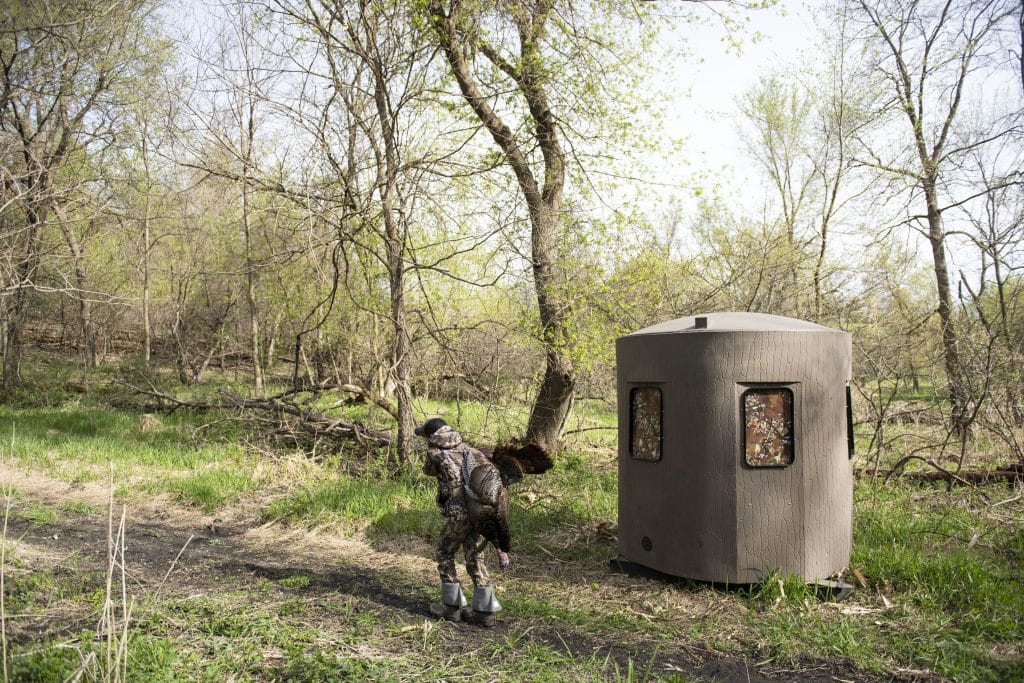
The spring turkey hunting season starts in less than a month, on April 16, here in Minnesota. We’ve got some tips for everything you need to know about the hunting regulations for the 2025 spring turkey hunting season so you can go into it prepared, informed and ready to ethically and legally harvest your next bird.
The most important regulations to remember are that hunters can tag one bearded turkey during the allotted timeframe and shooting hours are one-half hour before sunrise to sunset.
Turkey season runs from April 16 – May 31. Archery season is open in all areas the entire turkey season, but the firearm season is separated into sections A-F, with each region in Minnesota open about a week at a time. You’ll need a separate permit for each type of hunting. Apply for each to hunt with either equipment style.
Any new hunters 18 or older who are still learning how to hunt and are being mentored by a more experienced hunter can hunt with the licensed hunter without needing to have a license of their own. The unlicensed hunter can’t shoot the turkey, but they can go along with the hunter as they hunt.
You must tag the turkey as soon as you harvest it. Make sure the tag has the correct date of the date you harvested it. Attach the tag to the bird before you take it off the property. The tags must be attached to the turkey’s leg with a string, so make sure you pack string in your Bucket Backpack before you leave for your hunt.
You’ll need to register your turkey with the state within 24 hours of harvesting it. You can go to a registration station in person, call it in over the phone or register it online.
The regulations also state that “the feathers, head, and feet must remain on the wild turkey until it is registered. Once registered turkeys may be transported with just a fully feathered attached wing, or an intact leg and foot.”
Red dot scopes and range finders are legal, but hunters can only use shotguns 10 gauge or smaller, including muzzle-loading shotguns and can only use shot size No. 4 or smaller.
Bows must have a draw weight of at least 30 pounds. Broadheads need to have at least two metal cutting edges of barbless design at least 7/8 inch in diameter, or a blunt head. Expandable arrowheads must be at least 7/8 inch at or after impact and should be barbless. Crossbows count toward the license.
Hunters can’t use hunting dogs or directly use supplemental feed to harvest a turkey. You can hunt near natural food sources, like naturally occurring farm land and crops, but you can’t hunt near your own feeder that has been directly placed by you. These regulations apply to Minnesota, so check your local regulations to see if supplemental feeding is legal during turkey season in your state.
Visit the Minnesota DNR website for the full regulations.
Whether you’re hunting using a bow, firearms, or both, you can hunt easily and comfortably from our Stump blinds. Use our Bucket Backpack to easily carry your harvested turkey back to your car. Once you’ve harvested your spring bird, enjoy the wild game for your Easter dinner.
How are you planning your 2025 spring turkey hunt? Let us know in the comments below.
Best Shotgun Setups for Public Land Turkey Hunting
How to Stay Quiet While Hunting Early Spring Gobblers