

Public land makes hunting accessible to any outdoorsman or outdoorswoman who wants to try it. You don’t have to know a hunter or have the funds to buy your own private land to take part in the sport. You can simply pick up a bow or hunting rifle, take some lessons, familiarize yourself with a deer’s vital organs, and go to public hunting land. As long as you have the proper hunting license and tags, you can hunt on any land marked for public hunting. This week, we’ll share some tips on how you can find a big buck this fall.
Avoid Packed Areas
If you arrive at the hunting grounds and you see a bunch of other blinds and stands set up, try to keep going until you find an area that’s not quite so congested. If there are too many hunters in one area, the deer will likely be too on guard to walk through the area, and even if they did, you’d be battling against the other hunters for the shot opportunity and the tag. You don’t need to be completely secluded, but try not to be right on top of another hunter.
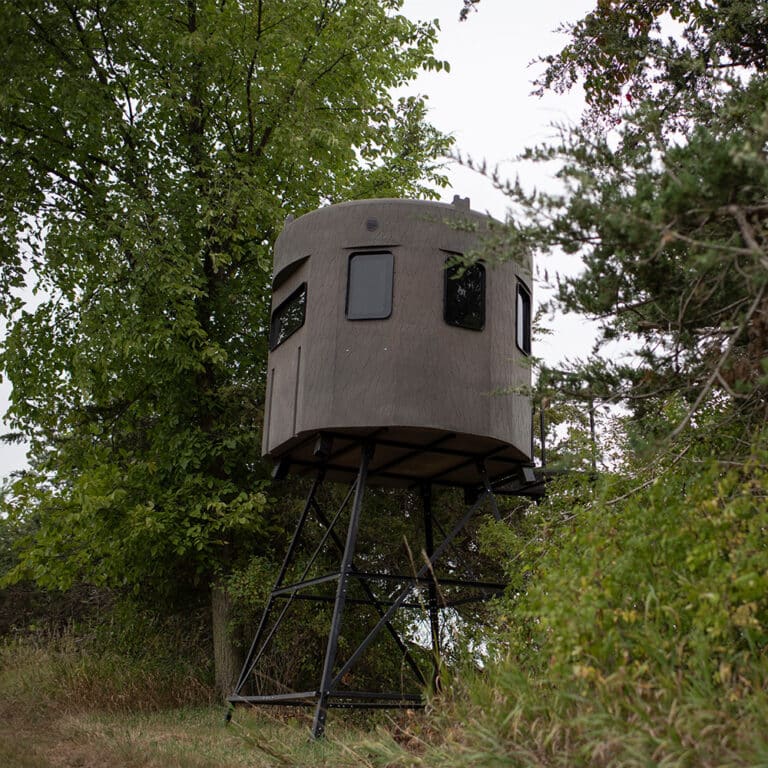
Our Stump blinds are easy to move around, so you’ll have no problem towing your Stump blind along behind your ATV while you look for the perfect spot.
Find Natural Water Sources
Deer gravitate to areas that have a water source. They’ll set up their bedding areas nearby, especially if there’s a food source, too. They don’t want to have to travel far to find the things they need, so once they find a good source, they’ll set up shop in the area for a while. If the area provides them adequate enough nutrition, they’ll stay within a one or two-mile radius of the sources. If the food and water sources are scarce, they could cover around a 10-mile radius. They’ll travel as far as they need to, but as little as possible. So basically, the better the natural food and water is on a piece of public land, the more likely it is that a deer herd has made it its home base.
Look for Signs
Bucks will leave scrapes and rubs around the area if they want to alert nearby does and show them exactly where they can find them. This is most common during rut season, but if you scout out the area before the season begins, you’ll likely find last year’s rubs on the trees. Deer also rub their antlers on trees to try to scrape off the velvet from their antlers. This happens in late August or early September, so keep your eyes peeled this summer. Finding a series of scrapes can be a great way to give yourself a head start. Stay within areas you know have been proven hotspots.
Wear Blaze Orange
A major rule to follow on public hunting land is to wear blaze orange. Minnesota recently made it a requirement for hunters to wear blaze orange clothing or to cover the top or side of your blind with a blaze orange material. Make sure you’re adhering to these guidelines to keep yourself and others safe in the woods.
Hunting public land makes getting into the sport accessible and attainable. You can find public land in your area on many different hunting apps. Find one close to you and check it out before the season opens in September.
How do you find big bucks on public hunting land? Let us know in the comments below!
Exploring the Rules: Can You Hunt in a National Forest?
How to Mentor a New Hunter